
“The president, however, has all options at his disposal to ensure that Iran never gets a nuclear weapon,” a White House official said, acknowledging the pressure campaign even as Trump told reporters on November 9 he would hold off on strikes after meeting the prime minister of Qatar.
Mossad chief Roman Gofman arrived in Washington last week pushing for joint U.S.-Israeli strikes on Iran, meeting CIA Director John Ratcliffe and briefing officials on intelligence regarding Iran’s nuclear program, Reuters reported. Gofman then flew to Miami to press the case directly to Trump’s special envoy Steve Witkoff, who has been co-leading diplomacy on Iran and Ukraine, according to Israeli media reports cited by Reuters.
🚨 ISRAEL'S MOSSAD CHIEF IS IN WASHINGTON. IRAN IS AT THE TOP OF THE AGENDA. Mossad Director Roman Gofman is meeting senior Trump administration officials, including CIA Director John Ratcliffe, before reportedly heading to Miami for talks with U. S. envoy Steve Witkoff.… pic.twitter.com/jaIYhZO3xJ
The lobbying blitz comes as Prime Minister Benjamin Netanyahu, now a caretaker leader after an inconclusive election last month, faces accusations from political rivals that he is seeking escalation to bolster his standing. Netanyahu denies the charge. Sources told Reuters that Netanyahu believes the window to strike is narrowing, driven partly by concern the U.S. could draw down its substantial regional military deployment before year’s end.
Ron Dermer, a confidant of Netanyahu and former minister, was simultaneously in Washington advocating for a joint attack in meetings with Trump administration officials, the same sources said.
A war paused, not ended
The conflict erupted on February 28 with a joint U.S.-Israeli strike that killed Iran’s top leader, triggering Iranian retaliatory strikes on U.S.-allied Gulf states. A fragile ceasefire has held formally since April, though both sides have repeatedly exchanged fire — including this week, when the U.S. bombed an Iranian island and Iran launched attacks on Kuwait and Bahrain, Reuters reported.
Gulf leaders have privately urged Trump not to attack, warning that Tehran would follow through on threats to target Gulf Arab states in retaliation, according to a person involved in diplomatic efforts cited by Reuters.
Israel’s own military sees no imminent threat
In a notable departure, Israel’s military evaluates that Iran does not constitute an imminent threat to Israel, so immediate military action is not required, two people briefed on the intelligence told Reuters. The military did not respond to requests for comment.
That assessment undercuts the urgency of Gofman’s pitch. It also raises the question of whether the push for strikes is driven by operational necessity or political calculation — a question Netanyahu’s rivals are already asking loudly.

Trump’s calculus: pressure vs. combat
The White House official said Trump believes the economic pressure campaign is “devastating” to Iran and that there is no need for “major combat operations.” Yet the president has alternated in recent weeks between threats of new strikes and signals of de-escalation, with U.S. officials saying he does not appear to have made up his mind about how to resolve the conflict, Reuters reported.
Israel has warned of potential Iranian chemical weapons use, Axios reported. The New York Times confirmed Trump is weighing new strikes as Israel presses for action, while AP News detailed how Mideast nations are ramping up diplomatic efforts to avert all-out war.
The CIA declined to comment on any meeting between Gofman and Ratcliffe. Netanyahu’s office, which manages media inquiries for the Mossad, did not immediately respond to a request for comment.
Mossad, Israel’s national intelligence agency, was formed on December 13, 1949, as the Central Institute for Coordination at the recommendation of Prime Minister David Ben-Gurion. It was reorganized in March 1951 to report directly to the prime minister’s office, a structure that leaves it accountable to the premier rather than the Knesset. The agency employs around 7,000 people with an annual budget of roughly ₪10 billion, making it one of the world’s largest espionage services.
Its mandate covers intelligence collection, covert operations and counterterrorism. The organization comprises divisions including Tzomet, which runs agents abroad; Caesarea, which houses the Kidon elite assassination unit; and Keshet, responsible for electronic surveillance. In June 2017, Mossad launched a venture capital fund to invest in high-tech startups for cyber development.
What happens next
Qatar continues to mediate indirect U.S.-Iran talks aimed at avoiding a return to full-scale war.
Mossad chief Roman Gofman returned to Israel on Sunday after holding talks with senior US officials about Iran and is expected to brief the country's security cabinet, Israeli news outlet Ynet reported. During his visit to Washington, Gofman presented updated Israeli… pic.twitter.com/jy0MbxbGel
More on Iran
Mossad Director Roman Gofman is visiting Washington DC to meet with CIA Director John Ratcliffe and senior officials in the Trump administration, to push for a return to conflict with Iran.https://t.co/Gqw906HXxp
Keep reading
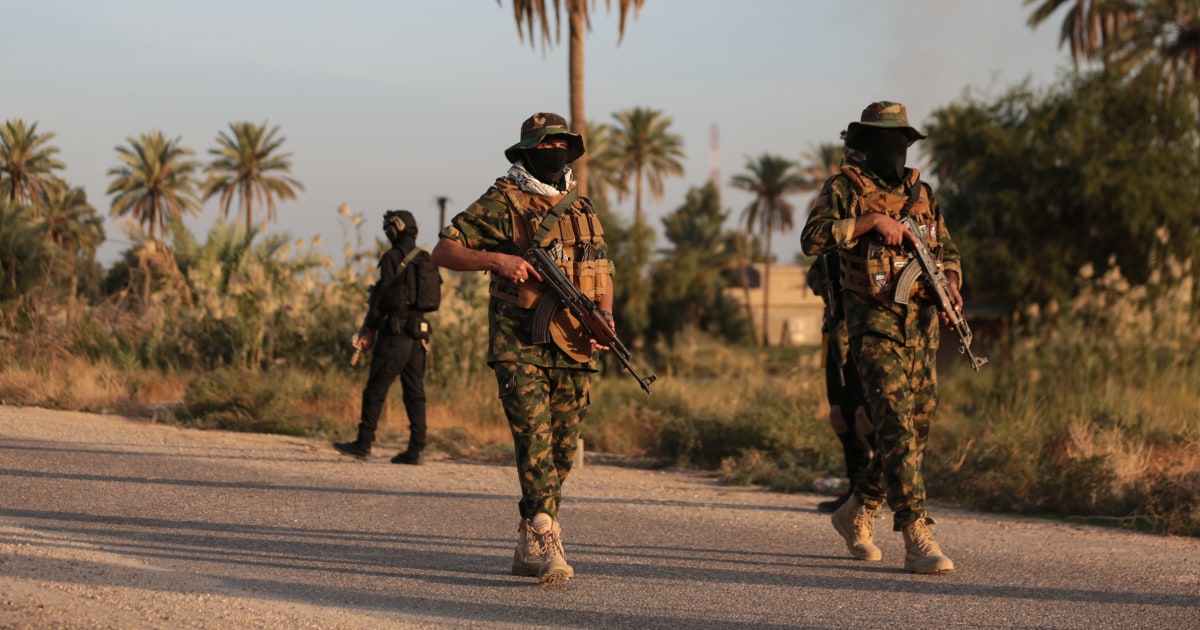
Iraq Reaches Compromise With Kataib Hezbollah to Avert Clash Over Oil Stronghold
Iraq's government and its most powerful Iran-backed militia stepped back from the brink of armed conflict Thursday, striking...

US Imposes Sweeping Financial Sanctions on Comanchero Gang and NZ Leaders
The United States Treasury Department imposed sweeping financial sanctions Thursday on the Comanchero outlaw motorcycle gang and the...

Xi Hosts Russia-China-US Summit in Shenzhen Focused on Symbolism Over Substance
History was made in Shenzhen on Thursday, but breakthroughs were not. The optics were the substance. "Overall, very...

Filipino Actress Jorrybell Agoto, the Quiet Force Behind the Philippines’ Oscar Entry Filipiñana
Filipino actress Jorrybell Agoto, the quiet force behind the Philippines' Oscar entry Filipiñana, died November 17 at St.