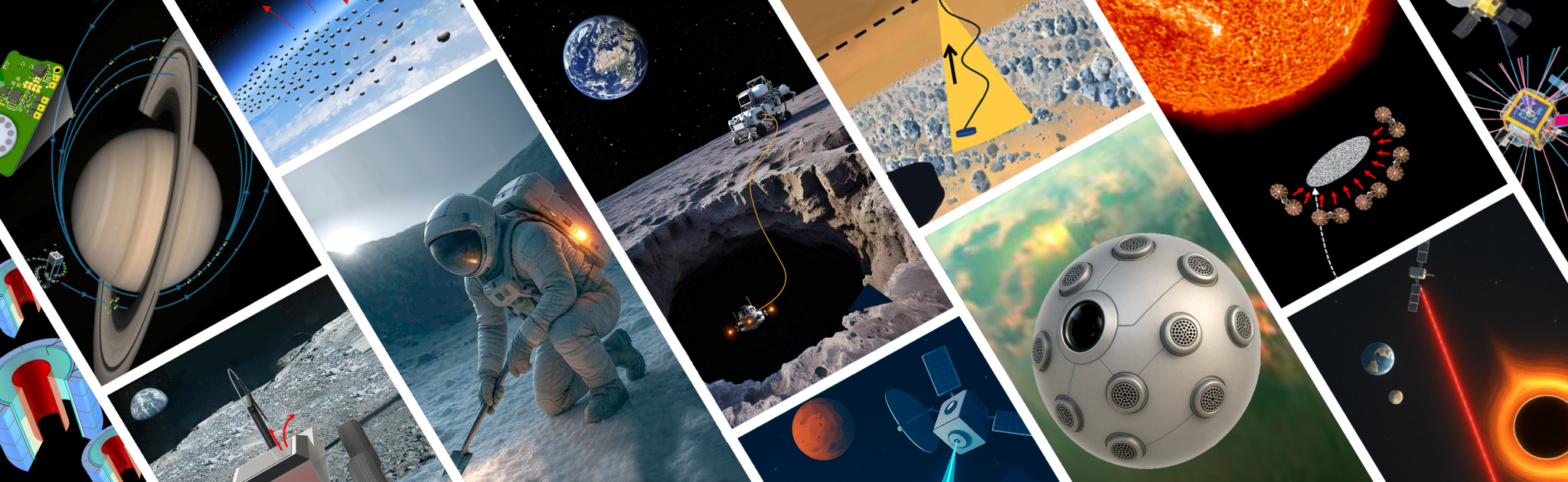
NASA has distributed $3.2 million across 18 early-stage technology concepts for space exploration, funding projects ranging from lunar-surface hovering robots to a 10,000-satellite swarm designed to study Saturn’s rings, according to recent agency announcements.
Funding Breakthrough Concepts for the Moon and Beyond
The NASA Innovative Advanced Concepts program has selected 18 new Phase I awards to support visionary ideas aimed at improving aerospace technologies, space exploration, and our understanding of the universe. Each award provides up to $175,000 for a nine-month initial investigation, bringing total funding for the current round to $3.2 million. Agency officials emphasize that these projects focus strictly on early-stage concept development rather than official missions.
NASA has outlined an ambitious vision for the future of space exploration, we’re returning the Moon to stay, advancing to Mars, and pushing to deepen our understanding of space,
said Greg Stover, director of the Advanced Research and Technology division within the Research and Technology Mission Directorate at NASA Headquarters in Washington. Achieving that will require more than incremental technological advancement. It means we need great leaps. These awards are the kinds of innovation the world needs NASA to help foster.
“Every innovation, every leap in technology, starts with a seed of an idea. The NIAC program allows NASA to germinate those seeds and determine if there’s something that could be grown to benefit future space missions and our nation’s aerospace economy.”
Phillip Williams, NIAC’s acting program executive
Targeting Lunar Infrastructure and Planetary Rings
With an eye toward a sustained lunar presence, several selected concepts address the practical challenges of exploring the Moon and building surface infrastructure. The award-winning proposals include a system to support hovering robots capable of exploring underground lava tubes beneath the lunar surface, a dedicated method for managing temperatures for small mobile exploration robots, and radioisotopic heat sources integrated into astronaut suits to combat the deep cold of nearly two-week-long lunar nights.
Beyond the Moon, researchers are tackling some of the solar system’s most hostile and distant environments. Venus presents an imposing challenge due to its scorching atmosphere, prompting one awardee to explore instrument-hardening techniques for extended missions. Meanwhile, outer planet research features two ambitious ring-exploration concepts: a swarm of 10,000 tiny satellites intended to map and analyze Saturn’s rings, alongside a dedicated system for collecting samples from the ring systems circling Saturn, Uranus, and Neptune.
Reaching Interstellar Distances and Addressing Earth-Bound Questions
The latest round of selections extends far past the solar system, examining propulsion methods for interstellar spacecraft, techniques to map exoplanet continents, observation tools for photon rings surrounding black holes, and methods to detect subtle gravitational waves that explain galactic formation.

Closer to home, other awardees are directing their early-stage investigations toward Earth-bound challenges. These include evaluating the potential use of spaceborne dust to reduce solar radiation and improving tracking awareness regarding the debris currently orbiting our planet.
Keep reading

SpaceX Launches Final Three O3b mPOWER Satellites for SES
SpaceX successfully launched the final three O3b mPOWER satellites for SES on September 13, 2026, from Cape Canaveral...
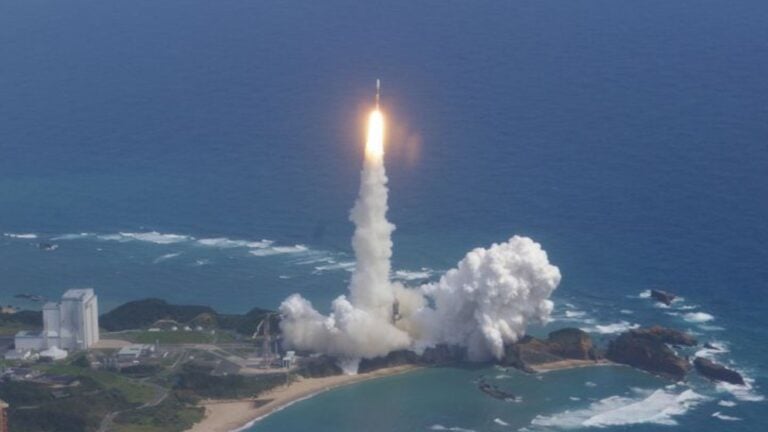
Japan Launches Kaguya Spacecraft to Map Moon in 2007
On September 13, 2007, Japan launched its advanced Kaguya spacecraft from the Tanegashima Space Centre aboard an H-IIA...

Astronomers Identify Eos, a Massive Molecular-Hydrogen Cloud Near the Sun
Astronomers have identified Eos, a massive molecular-hydrogen cloud located roughly 300 light-years away and spanning 40 full-Moon widths...
Researchers Find Diamond Melting Point Is Lower Than Previously Measured
Researchers zapping synthetic diamond plates with a powerful ultraviolet laser discovered the mineral's melting point is more than...