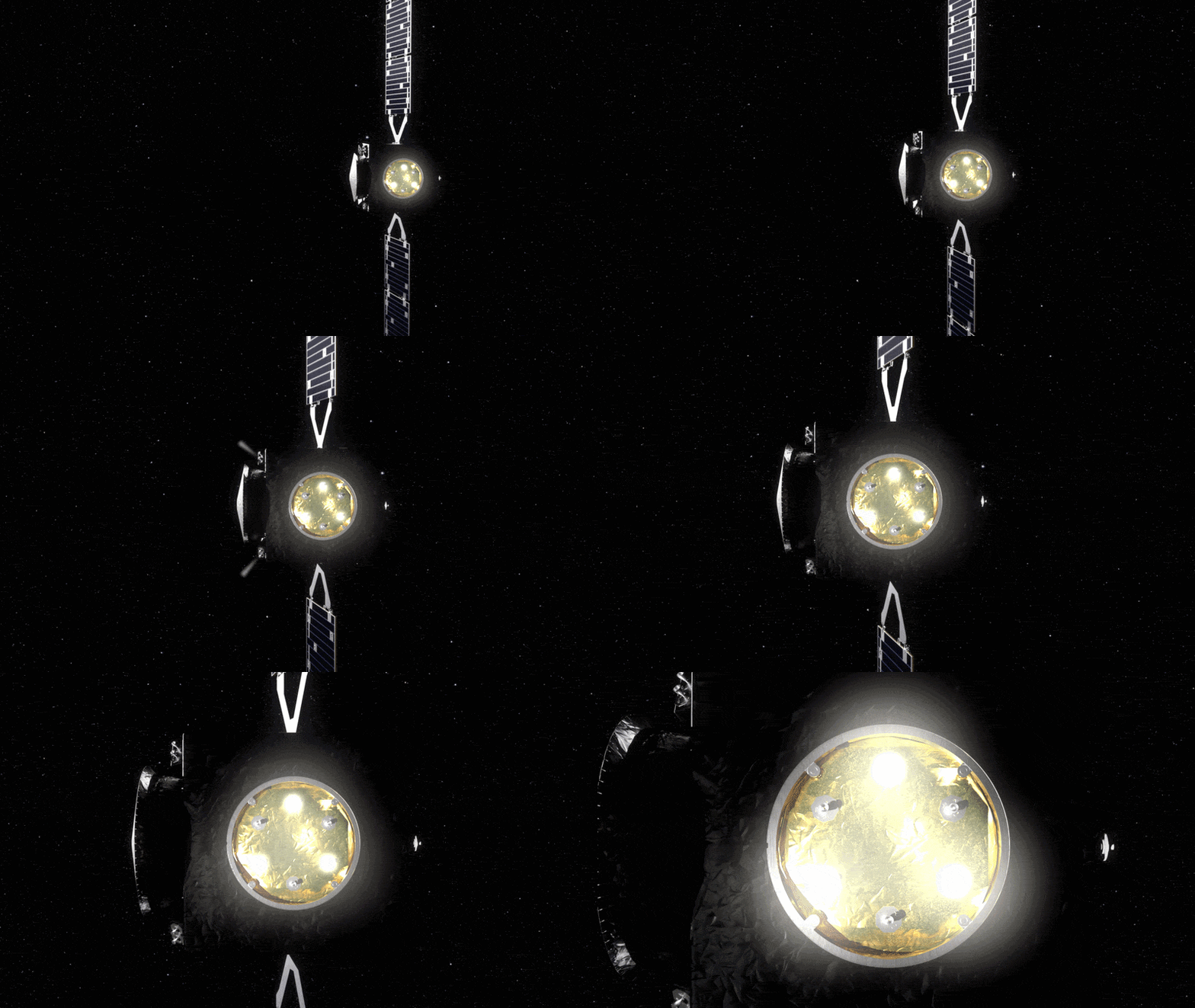
Two years after launch, the European Space Agency’s Hera spacecraft has successfully spotted its target binary asteroid system from roughly 146,954 miles away. The small-car-sized probe is now preparing for a high-stakes 93-minute braking maneuver on October 15 to match velocity with the space rocks previously altered by NASA.
Cruising away from Earth since its liftoff from Cape Canaveral Space Force Station in Florida on October 7, 2024, the European Space Agency’s planetary defense mission has reached a critical juncture. Just ahead of the incoming Hurricane Milton two years ago, Hera began an interplanetary journey shaped largely by solar gravity, punctuated by deep space maneuvers and a spring 2025 Mars flyby that boosted its speed.
Now hurtling relative to Earth at more than 12 kilometers per second, the spacecraft has finally caught a glimpse of its destination. Operating engineers identified the larger target, Didymos, against a background star field from an approximate distance of 146,954 miles away. To secure these first visual fixes, the flight team combined multiple images and performed photometric analysis, reducing the binary system to a tiny pixelated dot on onboard monitors.
Thrusters Will Decelerate Spacecraft on October 15
Coming close to matching the orbital velocity of the target system requires serious deceleration. On the morning of October 15, mission operators will rotate the spacecraft so that its ring of Orbit Control Thrusters faces the Didymos system. Three hydrazine-based thrusters will ignite at once, burning continuously for approximately 93 minutes to reduce the probe’s relative velocity by a few hundred meters per second.

This initial braking maneuver, designated BRM-1, follows a brief test burn executed on October 2. Once the main thruster firing concludes, engineers will acquire telemetry signals through ESA’s 35-meter deep-space antenna located in New Norcia, Australia.
A second, shorter braking burn known as BRM-2 is scheduled for the early morning of October 22. Three smaller transition maneuvers later in the month will bring Hera’s relative speed with respect to the asteroid system down near zero.
Investigating the DART Impact Site on Dimorphos
The ultimate destination of the mission is the binary asteroid system consisting of the primary body Didymos and its smaller moonlet, Dimorphos. The latter holds the distinction of being the first Solar System object intentionally transformed by human action. On September 26, 2022, NASA’s DART spacecraft rammed into Dimorphos, successfully altering its orbital period around Didymos by about 33 minutes and ejecting enough material to slightly adjust the entire system’s orbit around the Sun.
https://x.com/esaoperations/status/2107848444798791936
Hera will perform a close-up crash scene investigation to examine how Dimorphos responded to the collision. These detailed surveys aim to turn the DART impact experiment into a well-understood and repeatable technique for planetary defense.
Yet approaching the irregular, rotating bodies carries inherent risks. Flight Dynamics teams cannot simulate every environmental variable in advance.
There’s a lot of uncertainty, especially in terms of the asteroid’s degree of tumbling due to the collision.
Michael Mueller, Flight Dynamics Engineer via The Daily Galaxy
Mueller also noted that the prospect of impact debris remaining in the vicinity of Dimorphos cannot be entirely ruled out, leaving potential surprises ahead as the spacecraft closes in.
Flight Path Challenges and Multi-Mission Pressures
Managing the approach requires sophisticated tracking that combines ground-based radiometric measurements with optical sensors. As the asteroids occupy a larger share of the spacecraft camera’s field of view, recognizable surface landmarks will serve as vital reference points.
Behind the scenes, a division of more than 50 mathematicians, physicists, and aerospace engineers handles the trajectory calculations, with about 10 specialists working per shift. Their workload is exceptionally heavy because the same team oversees flight paths for other agency science operations across the Solar System.
As Hera approaches Didymos, the team is simultaneously managing the BepiColombo mission’s approach to Mercury and preparing for the launch of the Plato exoplanet-monitoring observatory toward the Sun-Earth Lagrange point L2.
Hera Will Release CubeSats by Early 2027
Following arrival, operations will unfold across distinct phases designed to gradually minimize risk while maximizing scientific return. During November and December 2026, the spacecraft will occupy an early characterization orbit roughly 25 to 30 kilometers away from the asteroids to gather baseline data on their shapes and rotational behaviors.
In late December, the mission will shift to a detailed characterization phase, lowering the spacecraft’s minimum distance to approximately 10 kilometers. By early 2027, Hera is scheduled to release two small companion CubeSats to expand observational capabilities.
That deployment will add another layer of operational overhead for the flight dynamics division, which must track three distinct spacecraft moving around two separate asteroids in a coordinated scientific investigation.
Keep reading
Delegates to Vote on Abolishing Leap Second to Protect Systems
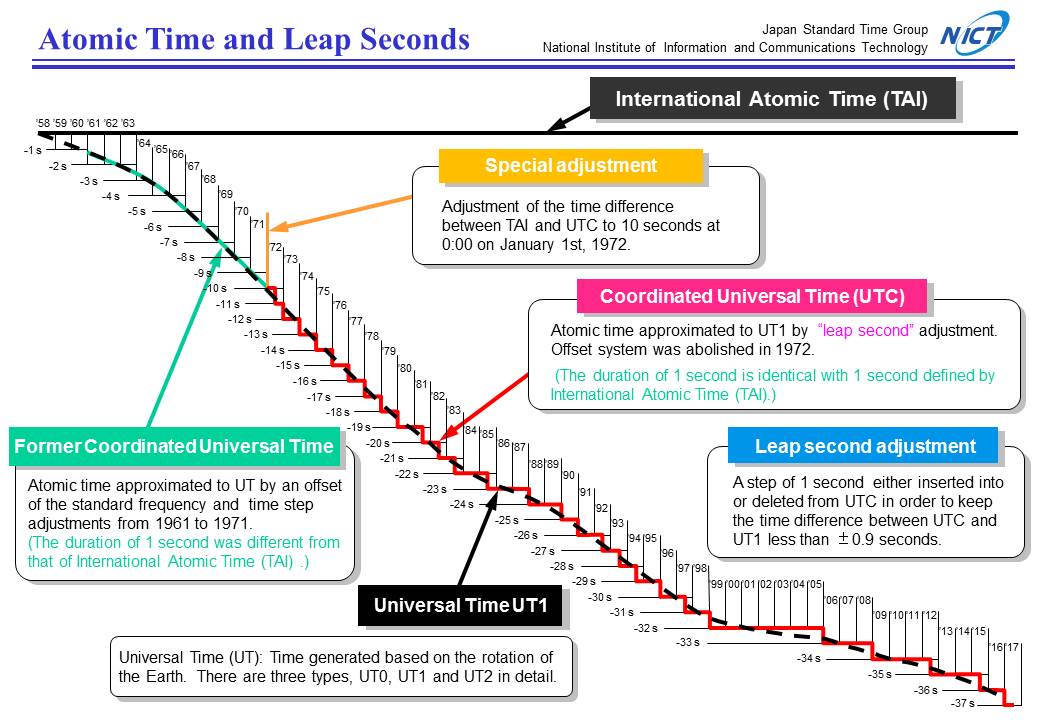
Delegates meeting near Versailles this week will vote on abolishing the leap second, driven by Earth's recent speed-up.
Researchers find quantum systems retain statistical traces of initial states
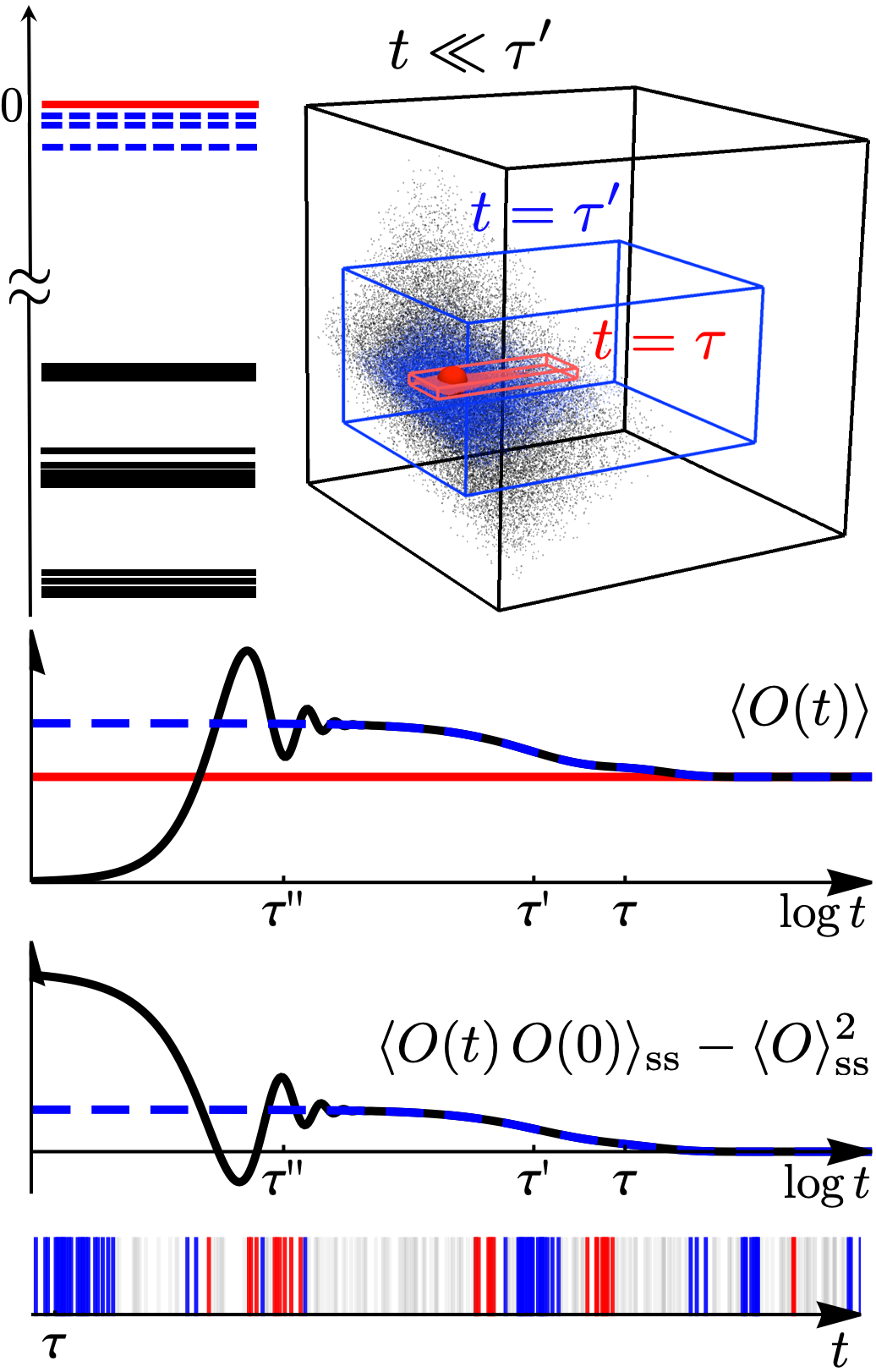
Researchers at Harvard University, Tampere University, and TU Dresden published findings in Physical Review X on October 11,...
NASA Releases Artemis II Lunar Science Data and Farside Images
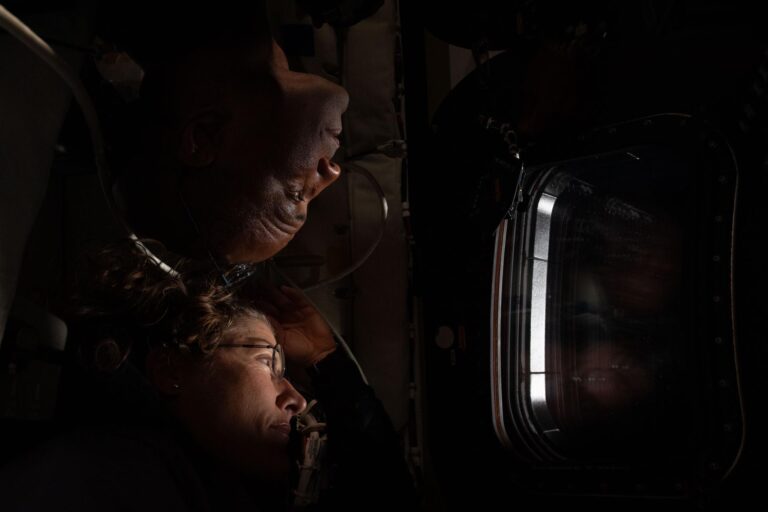
NASA released nearly a terabyte of Artemis II science data and reports on Wednesday, featuring 11,000 images, audio...

UK Skies Illuminated by Northern Lights as Geomagnetic Storms Continue
Skies across the UK lit up with the aurora borealis on Friday and Saturday evening as energetic solar...