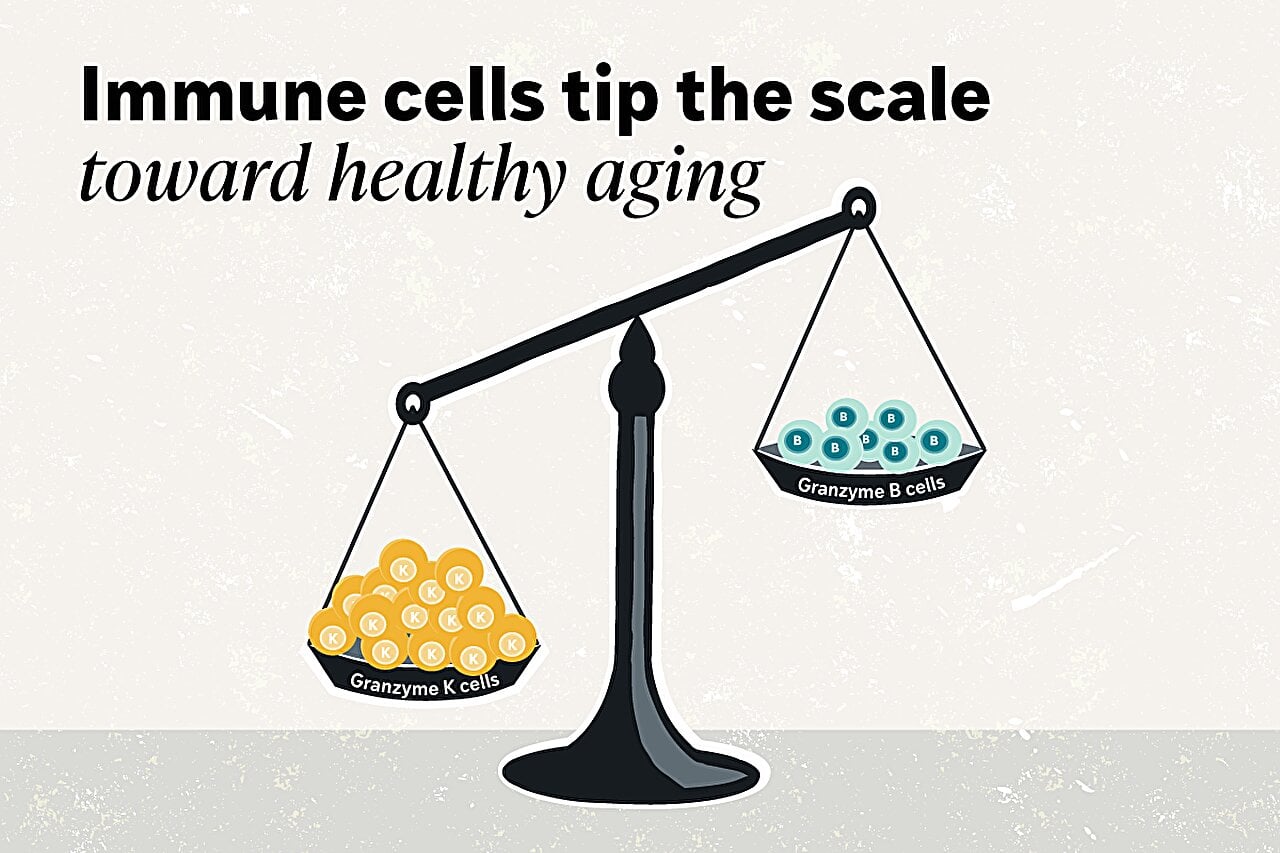
Researchers analyzing millions of immune cells from global cohorts have discovered that the ratio between two white blood cell types reveals whether an individual is on a healthy or unhealthy aging trajectory. The findings point toward blood diagnostics capable of spotting chronic disease risks years before clinical symptoms emerge.
While chronological age marks the passage of years, it rarely tells the full story of human vitality. Two individuals born on the same day can possess vastly different immune defenses, leaving some older adults resilient while others face escalating risks of age-related illness. To decode this disparity, an international research team analyzed approximately 12.4 million individual immune cells drawn from the blood of 2,609 mainly healthy adults ranging from ages 20 to 90-plus across eight cohorts spanning North America, the United Kingdom, Asia, and Australia, according to findings published October 9 in Immunity.
Washington University and Global Collaborators Map White Blood Cell Shifts
Led by investigators at Washington University School of Medicine in St. Louis, Nationwide Children’s Hospital in Ohio, and King’s College London in the United Kingdom, the study established a detailed map of human immune aging. Younger blood samples showed uniform enrichment with naive immune cells that remain adaptable to new infections or vaccines. In contrast, older immune systems displayed greater diversity, marked by an increased abundance of inflammatory cells.
The researchers placed participants along a biological spectrum defined by the balance between two specific white blood cell types: granzyme B-producing cells and granzyme K-producing cells. Both belong to a class known as effector memory CD8 T cells, which utilize molecular weapons called granzymes to destroy target cells or orchestrate immune responses.

UK Biobank Data Links Granzyme Profiles to Chronic Disease and Mortality
To determine whether an individual’s position on this cellular spectrum could predict future health outcomes, the investigative team turned to the UK Biobank, a massive database tracking 500,000 initially healthy participants aged 40 to 69 for up to 15 years. That model mapped the protein tracks left behind by granzyme B and granzyme K dominance.
Healthy adults whose immune profiles leaned heavily toward granzyme B cells faced an elevated risk of death a decade later compared to those exhibiting more granzyme K cells.
The granzyme B-dominant group also showed a significantly higher likelihood of developing major chronic conditions over the following ten years. These included Type 2 diabetes, hypertension, liver disease, and renal failure.
A healthy immune system gradually shifts toward granzyme K cells over time. Conversely, early dominance by granzyme B signals unhealthy aging pathways that can take hold much earlier in life.
Duke-NUS Study Identifies Accelerated Waves of Immune Aging
In a related advance, scientists at Duke-NUS Medical School investigated how immune cells change across the human lifespan. By integrating genetic activity data from 3.8 million individual immune cells across nearly 2,000 healthy people aged 19 to 97, the researchers determined that immune cells do not age at a steady rate.
Instead, the team uncovered distinct periods of accelerated aging, with major gene activity shifts occurring around age 40 and again after 60. T cells played a central role during both peak windows, though different specialized subtypes drove each wave. The analysis also revealed sex-specific variations in these trajectories, offering potential clues into why women face higher rates of autoimmune conditions such as lupus and rheumatoid arthritis.
Developing Routine Blood Tests for Subclinical Immune Stress
Mapping patients onto the immune aging spectrum currently demands specialized and costly technology. However, researchers are actively working to translate their discoveries into accessible clinical tools.
“Identifying specific biological red flags in the immune system could pave the way for early-warning tests that spot disease risks years before a clinical diagnosis.”
Artyomov and his laboratory are adapting the research into a streamlined blood test that can be processed using standard laboratory equipment. The objective is to provide physicians with an everyday diagnostic that alerts them to subclinical immune stress before chronic symptoms appear.
“We can think of it like checking a car’s oil level before the check engine light ever turns on. Our goal is to develop an early-warning diagnostic that alerts physicians to subclinical immune stress, prompting more specialized testing that could allow for intervention long before chronic disease symptoms appear.”
This early detection approach aims to shift the medical paradigm toward proactive intervention, potentially preventing the onset of chronic diseases through timely and specialized diagnostic testing.
Worth a look

Louisa Nicola Outlines Lifestyle Changes to Prevent Alzheimer’s
Neuroscientist Louisa Nicola argues that up to 95 percent of Alzheimer’s cases are preventable through lifestyle choices, pointing...

Marking World Mental Health Day 2026, the Irish government announced an €11 million funding package
Marking World Mental Health Day 2026, the Irish government announced an €11 million funding package to expand youth...

CU Anschutz Study: Horseback Riding Cuts Hyperactivity in Autistic Youth
Therapeutic horseback riding cuts hyperactivity in children with autism and co-occurring psychiatric conditions, according to new research published...

Routine Blood Tests May Predict Long-Term Dementia Risk
Routine blood screening tests and advanced genetic markers are offering doctors new ways to estimate long-term dementia risks...