NASA’s New Horizons spacecraft has awakened from a 321-day hibernation period, reporting all systems green nearly 5.9 billion miles from Earth. Having previously explored Pluto and the icy world Arrokoth, the probe continues its extended journey into the Kuiper Belt.
Deep in the outer solar system, away from the warmth and light of our sun, a lone spacecraft is back at work. NASA’s New Horizons probe successfully ended its longest sleep on record, waking itself up on schedule after 321 days of resource-saving hibernation.
A Health Check Across Nearly Six Billion Miles
Flight controllers at the Johns Hopkins Applied Physics Laboratory received confirmation that the spacecraft had utilized its onboard commands to rouse itself from its slumber. Because the probe currently sits roughly 5.9 billion miles away from Earth, radio signals take nearly nine hours to bridge the vast interstellar gap.

While operators do not maintain active communication with the spacecraft during its deep-space naps, New Horizons routinely collects health telemetry and transmits a weekly beacon back to Earth. Those routine check-ins kept mission control informed throughout the entire dormant stretch.
The History of Hibernation in the Kuiper Belt
Putting a distant spacecraft to sleep is not a new routine for the mission team. Since 2007, New Horizons has entered hibernation 23 times, with individual rests lasting anywhere from just a few days to many months. Flight controllers placed the probe into its latest sleep cycle on August 7, 2025.
Mission operators rely on these extended naps to extend spacecraft life and reduce mission operation costs. While dormant, the probe maintains a stable spinning mode while keeping a majority of its onboard systems unpowered.
From Pluto Flyby to Arrokoth and Beyond
New Horizons first captured global attention during its historic July 2015 flyby of Pluto, revealing unexpected geological activity, nitrogen glaciers, and towering water-ice mountains on the distant dwarf planet. Following that encounter, the spacecraft used its remaining fuel to target an even more distant Kuiper Belt object.

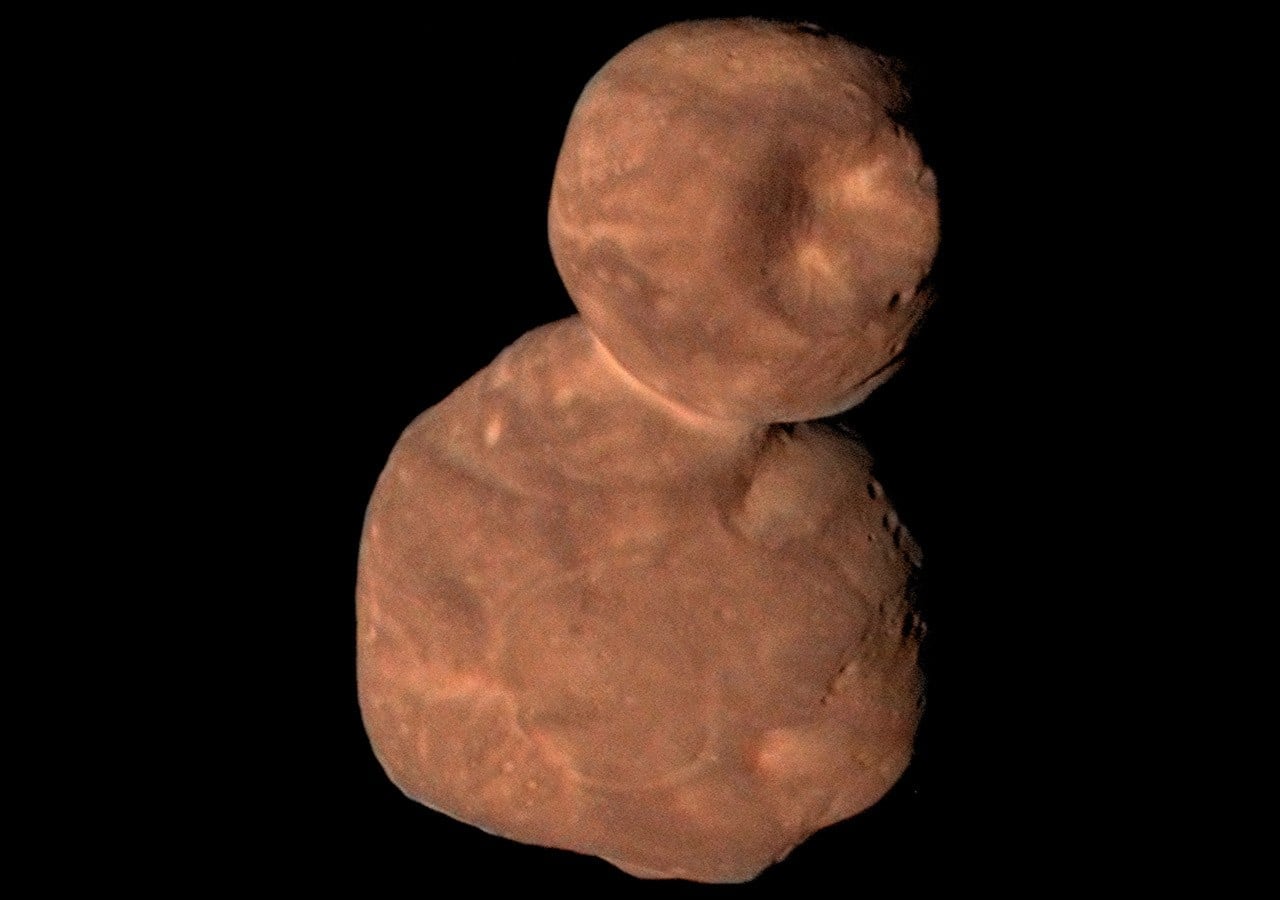
On January 1, 2019, the probe swept past a small icy world known as Arrokoth, located about four billion miles from the Sun. That encounter made Arrokoth the most distant object ever visited by a spacecraft.
Scientific analysis of departure photographs later revealed that Arrokoth is a contact binary shaped like two flattened, gently joined bodies rather than simple round snowballs. Researchers concluded that the object formed through a slow, low-speed merger in the early solar system, surviving intact because final contact occurred at a gentle pace of less than five meters per second.
Data Analysis and the Path Ahead
Now that the spacecraft is awake, flight controllers Mark Lahr, Josh Albers, and mission operations manager Alice Bowman are actively downloading and analyzing the health and safety data transmitted from deep space.
Once the technical team verifies that all systems remain stable, operators will shift their focus to downloading the scientific data gathered by the onboard science instruments while the probe was asleep. NASA has extended the mission to continue for as long as the spacecraft can keep waking itself up from its routine naps to study the Sun’s outer heliosphere and distant icy bodies.

Sand Hoppers Move Hundreds of Tons of Sand on California Beaches
Inch-long beach crustaceans known as sand hoppers dig fresh burrows nightly along Southern California shores, moving an estimated...

Scientists Discover 13 Fatty Acids in Cat Urine That Form Unique Scents
Researchers in Japan, Germany, and Spain have discovered 13 unusual branched-chain fatty acids in domestic cat urine that...

Google Patents Filing Details New Text Classification Method for Office Systems
While traditional office automation approaches historically relied on multi-label document categorization based solely on body text, newly surfaced...
Ancient rocks from Western Australia suggest Earth was already dragging surface water into its mantle and using it to generate volcanoes 3.1 billion years ago — through a primitive recycling process that may have preceded modern plate tectonics
Geologists examining ancient volcanic formations in Western Australia have discovered evidence that water was influencing Earth's interior and...