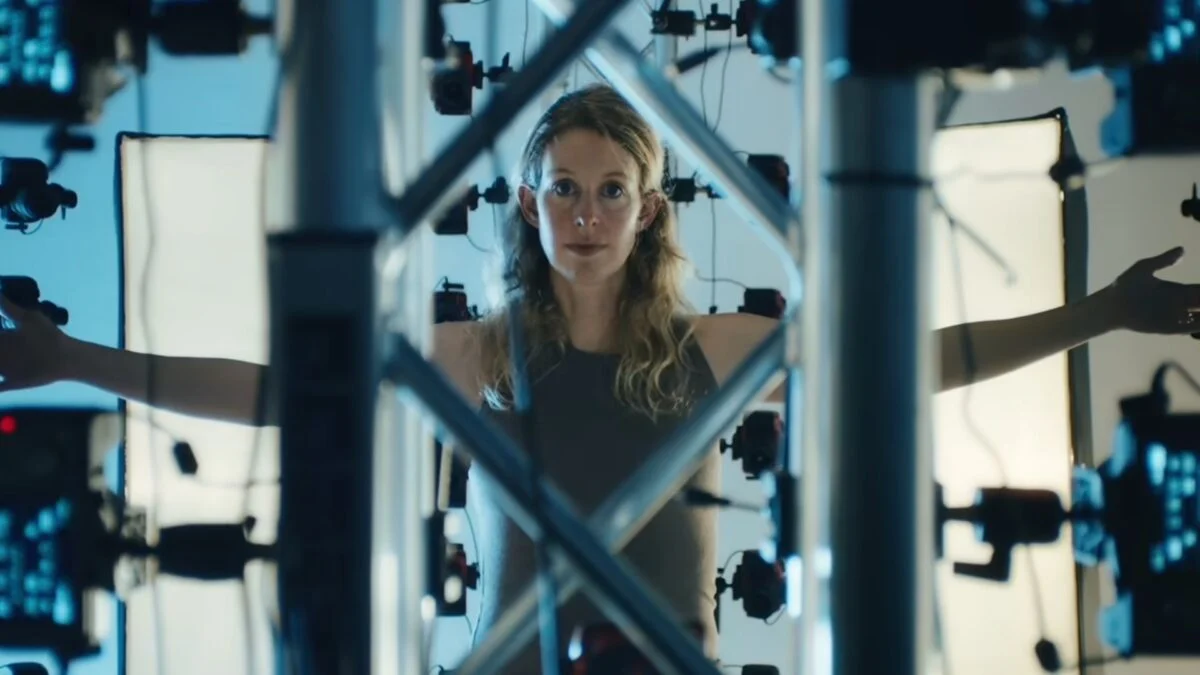
Nathan Fielder and Lance Oppenheim’s documentary You Can See Everything, which examines the final days of Theranos founder Elizabeth Holmes before her imprisonment, opened this weekend to a staggering $15 million in North American ticket sales. The film has sparked intense debate over the nature of truth, performance, and documentary ethics.
Box Office Performance and Theatrical Reach
The film’s debut, which grossed more than $15 million during its opening weekend, marks one of the strongest non-musical documentary openings in domestic box office history. Despite a limited release in only 2,600 theaters across Canada and the U.S., the film continued its momentum into the work week, winning Monday at the domestic box office with $2.57M. Current North American tallies place the film at $18.1M through its first few days.
The success of the documentary, which was produced for less than $10M, has surprised industry analysts. While it is currently tracking behind the A24 sensation Backrooms, which saw a $7.6M first Monday, its performance has outperformed other recent releases such as Iron Lung ($2.05M). As A24 expands the film’s reach to at least 2,600 theaters, industry speculation suggests it could challenge the upcoming genre film Clayface at the box office.
—> “You Can See Everything” just saw the biggest box office opening for a documentary in more than 20 years. https://t.co/OqUFsE11gZ
The Blurred Lines of Documentary Truth
The documentary focuses on the 34 days leading up to Elizabeth Holmes reporting to federal prison in Bryan, Texas, to begin an 11-year sentence for defrauding investors. Throughout the film, directors Nathan Fielder and Lance Oppenheim embed themselves with Holmes, her partner Billy Evans, and their children. However, the film frequently shifts from traditional documentary observation to staged reenactments, specifically through the inclusion of actress Amanda Seyfried.
Audience reaction has been visceral, with reports of viewers gasping and physically leaning toward the screen during screenings. The film’s unconventional approach has led some to question its veracity.
‘YOU CAN SEE EVERYTHING’ opened with $15M domestically.Biggest opening weekend for a non-music documentary in over 2 decades. pic.twitter.com/OpEeHoM32p
The Role of Amanda Seyfried and Reenacted Reality
A significant portion of the film’s critical conversation centers on the involvement of Amanda Seyfried, who steps into the frame to reenact interactions that the directors were unable to capture on film. Seyfried, who previously portrayed Holmes in The Dropout, appears on screen to watch the documentary footage with Fielder, effectively blurring the line between the subject and the performer.
Some suggest that the use of reenactments allows Fielder to bypass the limitations of a traditional documentary, while others argue that it obscures the reality of the Theranos fraud. The film explicitly explores this tension, particularly in a scene where Fielder asks Holmes about her history of deception, only to be met with a flat denial.

Theranos Financial Records and Public Perception
The documentary arrives years after the 2018 conviction of Holmes for defrauding investors. According to Securities and Exchanges Commission findings, Holmes had previously provided financial results for fiscal year 2014 claiming $108 million in revenue, despite the company recording little more than $100,000 in actual revenue during that period.
As the film continues its wide release, the debate over whether You Can See Everything is a work of journalism or a piece of performance art remains unresolved.

Nintendo Switch Sports Resort Launches on October 22, 2026
Nintendo brings its iconic tropical hub back for the Switch 2 with Nintendo Switch Sports Resort, launching on...

Conjoined Twins José Luis, José Armando Cevallos Dead at 27 After Emergency
Ecuadorian conjoined twin influencers José Luis and José Armando Cevallos have died at age 27.

Bon Jovi Returns to Australia
Bon Jovi will return to Australia for their first stadium tour in more than eight years, kicking off...
Caryl Churchill Premieres Triumph in London and New York
Playwright Caryl Churchill’s new short play, Triumph, premiered at London’s Almeida Theatre.