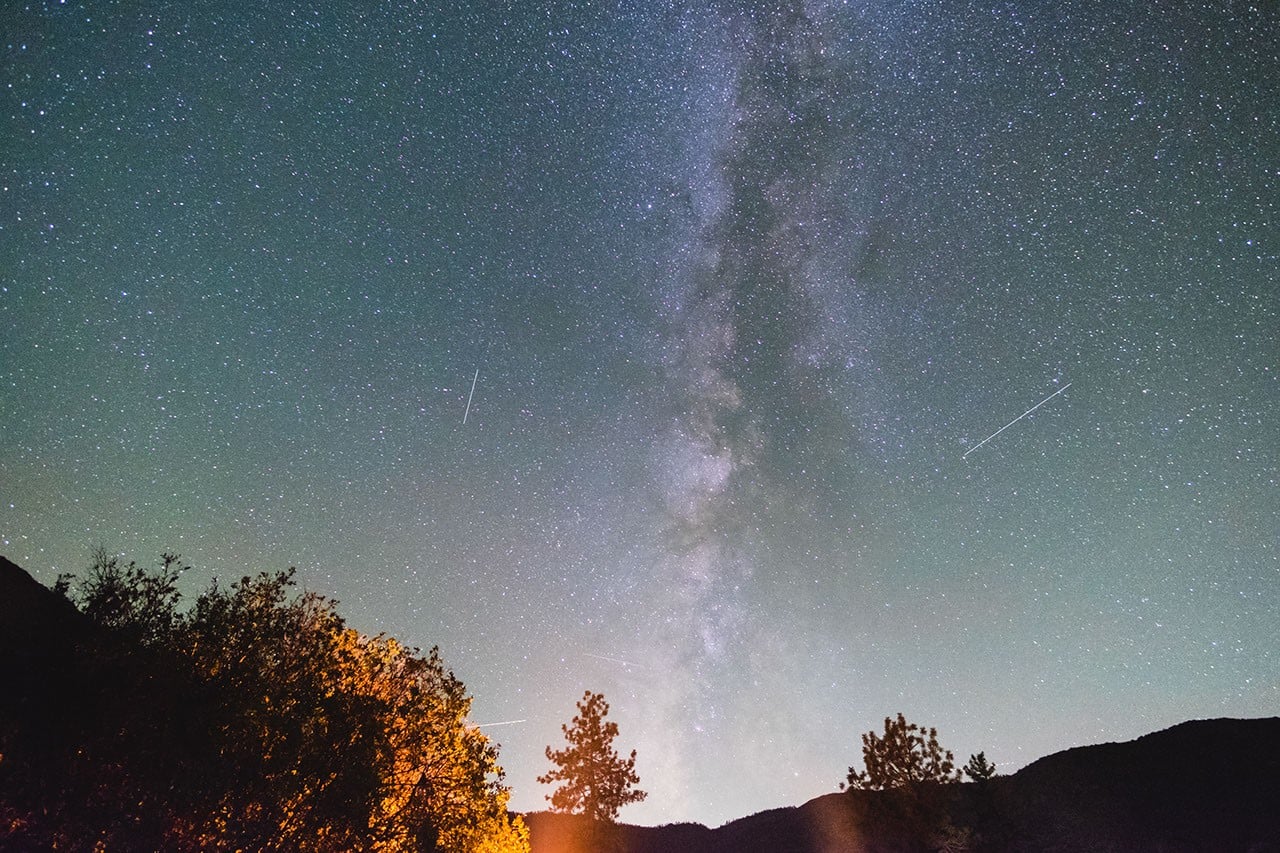
Saturn reaches opposition on Sunday, October 4, 2026, sitting at its closest point to Earth for the year at 784 million miles away. The ringed planet rises in the east around sunset, shining at magnitude 0.3 to become visible all night as the only planet in the night sky from dusk until dawn.
The astronomical alignment places Earth directly between Saturn and the sun, setting up the brightest viewing period of the year.
Saturn Rings Open to Reveal Southern Hemisphere Features
After appearing nearly edge-on in 2025, the ring system is opening back up, allowing astronomers a clearer look at the southern hemisphere features and the planet’s south pole tilted some 7 degrees to our line of sight.
Astrophysicist Dr Brad Tucker noted that the rings appear as a line across Saturn and going out away from the planet from our current perspective. Observers using moderate equipment can also pick out Titan, the planet’s largest satellite at mid-8th magnitude, alongside other icy moons like Tethys, Rhea, and Dione depending on local visibility conditions.
Sunday is optimal, but really anytime in the next few weeks will be ideal.
Dr Tanya Hill, Astronomer
In New Delhi, Saturn rises at 6:11 pm on October 4, culminates at about 12:17 am, and sets around 6:23 am the following morning. Across the globe, city-specific rise times cluster near sunset, with Dubai seeing the planet rise at about 6:40 pm and remain visible until shortly before 7 am on Monday. Jackie Faherty, an astrophysicist at the American Museum of Natural History, noted that fall is a great time of year for stargazing because the weather is good, adding that Saturn is definitely the star of the month and bright enough to be seen over New York City’s light pollution and a full moon. Bart Fried, a member of the American Astronomical Society, observed that people cannot believe you can see the rings and see Saturn with relatively small telescopes, emphasizing that everybody remembers their first view of Saturn because it is unbelievable.
Observatories Host Public Stargazing Gatherings
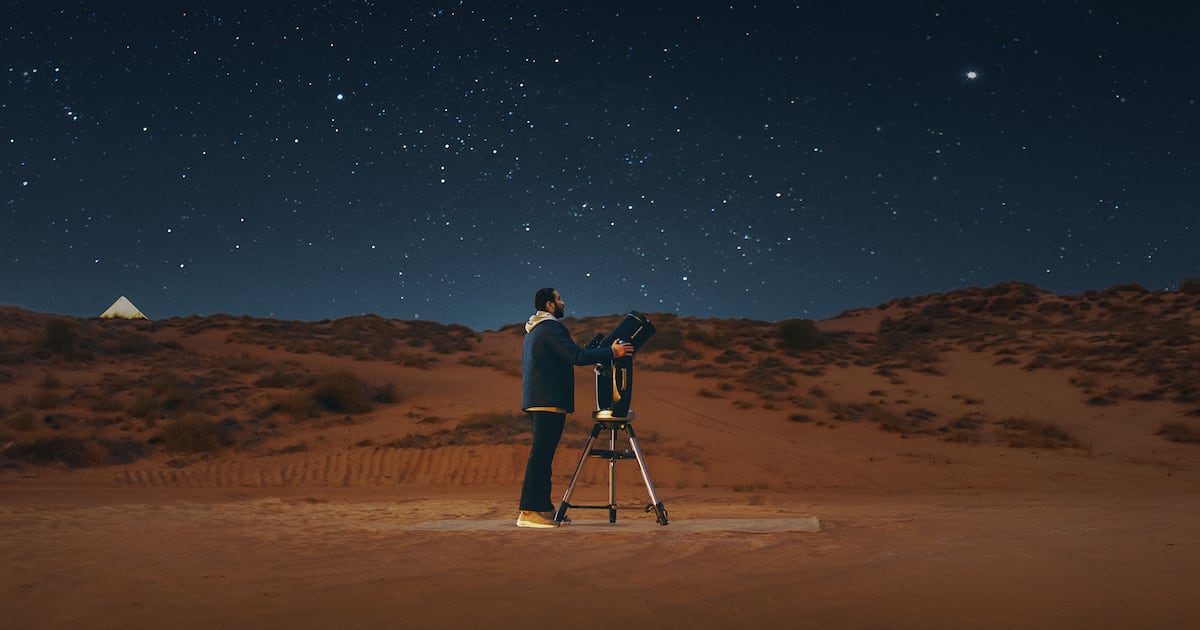
In the United Arab Emirates, Mleiha National Park in Sharjah is hosting a special Saturn Opposition event at the Mleiha Eye campsite running from 6 pm to 11 pm. The evening programme begins with a Cosmic Walkthrough featuring astronomy activities, followed by a presentation explaining Saturn opposition at 9 pm, and telescope observations and guided stargazing scheduled from 9:30 pm until 11 pm under darker desert skies. Tickets for the Mleiha National Park gathering are priced at Dh200 for adults and Dh150 for children, with dinner available as an optional extra. The Amateur Astronomers Association is holding its 30th annual Autumn Starfest on October 24 at Inwood Hill Park.
NASA’s October calendar includes the Draconid meteor shower running from October 6 to 10 and peaking on the night of October 8, followed by the Orionids peaking on the night of October 21 into the morning of October 22 under a bright waxing gibbous Moon. Raquel Villanueva from NASA’s Jet Propulsion Laboratory outlines that the month’s schedule also features a thin crescent Moon appearing close to bright Jupiter before sunrise on October 6, and a full Hunter’s Moon occurring on October 25. Later in October, specifically on the night of October 27 into the 28th, the Moon will pass close to the Pleiades star cluster, also known as the Seven Sisters, offering another milestone for backyard observers who can view them with the unaided eye or binoculars and telescopes.
Keep reading
NASA Advances PRIMA Telescope to Phase B for Far-Infrared Research
NASA selected the PRobe far-Infrared Mission for Astrophysics, or PRIMA, to advance to Phase B development.
8-Hour SpaceX Flight Sets Speed Record for Crewed Spacecraft to ISS
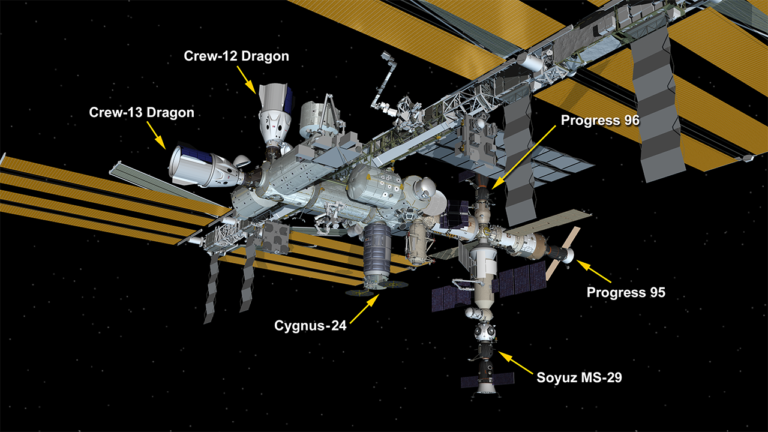
Canadian Space Agency astronaut Joshua Kutryk and three crewmates reached the International Space Station on October 1, 2026,...
Milky Way Began as Thousands of Galaxies, New Simulations Suggest
Astronomers simulating the early universe revealed that the Milky Way neighborhood began as thousands of smaller galaxies, offering...
NASA Selects Three Investigations to Study Lunar Resources and Shelters
NASA chose three scientific investigations led by Ariel Deutsch of NASA’s Ames Research Center in California’s Silicon Valley...