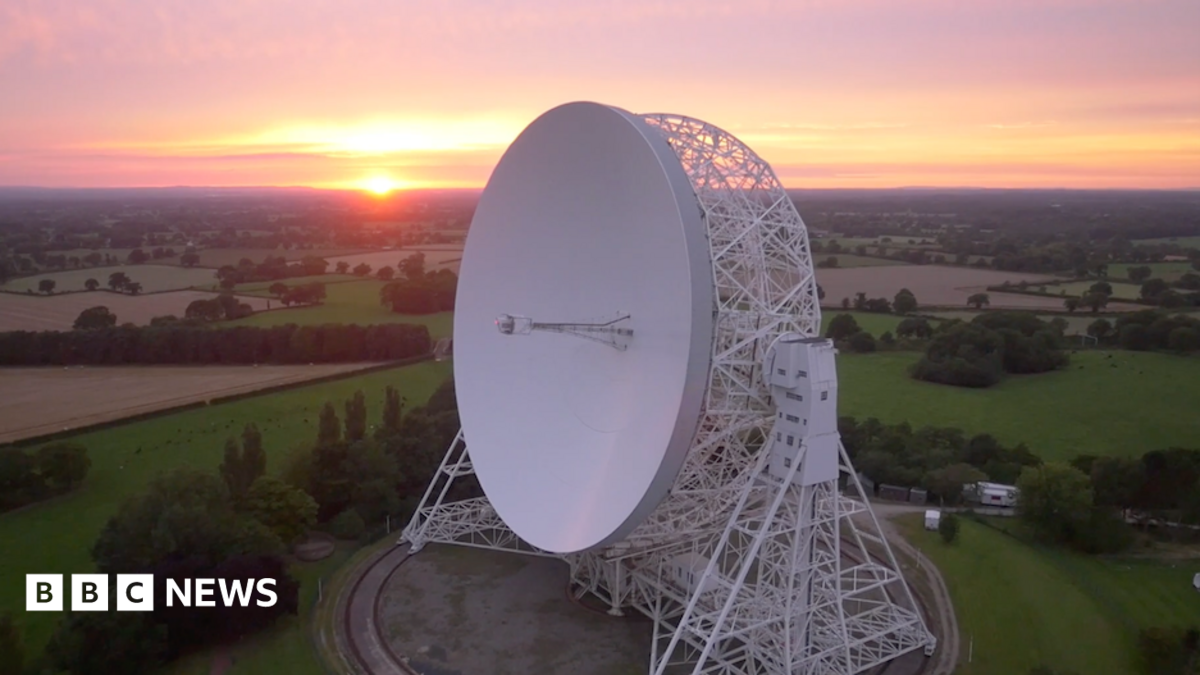
The iconic Lovell telescope at Jodrell Bank Observatory faces a severe funding threat as the Science and Technology Facilities Council grapples with an £80 million budget shortfall, casting uncertainty over critical British radio astronomy and training capabilities amid sweeping national science cuts under the Labour government of Prime Minister Gordon Brown.
Budget Shortfalls and Priority Rankings at the Science and Technology Facilities Council
The current financial crisis stems from a triannual budget shortfall of £80 million within a total £670 million budget managed by the Science and Technology Facilities Council. Following a December 11 budget announcement that proposed severe reductions for critical physics research and astronomy projects, the council published a Programmatic Review in March outlining all the science projects it funds in order of priority.
Scientists across the physics and astronomy communities immediately raised alarms after the report divided scientific projects into High, Medium-High, Medium-Lower, and Lower categories, with 18 projects listed as Medium-Lower Priority and a further 25 as Lower Priority. Among the initiatives designated as Lower Priority is the Multi-Element Radio Linked Interferometer Network, better known as MERLIN, e-MERLIN, and “Jive”—an array of radio telescopes centered directly on the world-famous Lovell telescope in Cheshire and operated by the nearby University of Manchester.
Scientific Reach and Upgrades at Jodrell Bank
Despite its age, continuous upgrades have kept the Lovell telescope at the very cutting edge of modern astronomical research. As the third largest steerable radio telescope in the world, its science was supercharged when it was connected to six other telescopes across central England to create the e-MERLIN network, with separations of up to 217 km. Joined together, these UK telescopes can zoom into objects in deep space and see them in incredible detail—with similar resolution to the Hubble space telescope.
The e-Merlin network is being used for research into how planets and their parent stars form, how galaxies evolve and the role played by supermassive black holes, and the invisible dark matter and dark energy that make up more than 95% of the Universe. Furthermore, another important role of Jodrell Bank Observatory is training UK astronomers in the science of radio astronomy. Observers warn that the closure of Lovell and the e-MERLIN network will mean that Britain will fall behind in a field that was pioneered at Jodrell Bank, just as other countries are investing in their own national observatories to prepare for the dawn of a golden age in radio astronomy driven by the construction of the Square Kilometre Array (SKA) in South Africa and Australia.
A Broad Array of Threatened Facilities
The review’s ranking system places numerous other domestic and international installations in jeopardy alongside Jodrell Bank. The affected projects span ground-based telescopes, solar observatories, and astronomical survey units spread across Hawaii, Chile, Spain, and Scandinavia.
MERLIN, e-MERLIN and “Jive”: An array distributed around Britain with separations of up to 217 km, currently preparing to complete a full £8 million upgrade to fibre-optic cables enabling the full use of each dish to be made. Astrogrid: An open-source project leading worldwide efforts in partnership with established astronomical archives and facilities to establish a Virtual Observatory with standardized simultaneous access. BiSON: The Birmingham Solar Oscillations Network consisting of six remote solar observatories monitoring low-degree solar oscillation modes. CASU/WFAU: The Cambridge Astronomical Survey Unit, part of the Institute of Astronomy at Cambridge University, mainly involved in survey astronomy. Gemini: The Gemini Observatory consisting of two of the largest telescopes in the world, with Gemini North in Hawaii being both very advanced and the largest telescope UK astronomers have access to in the northern hemisphere, alongside a second telescope in Chile. EISCAT: The EISCAT Scientific Association operating three incoherent scatter radar systems at 931 MHz, 224 MHz, and 500 MHz in northern Scandinavia to monitor solar-terrestrial interactions producing the Northern Lights. UKIRT: The United Kingdom InfraRed telescope located on Mauna Kea in Hawaii, carrying out the most extensive infrared sky survey ever attempted. UKATC: The UK Astronomy Technology Centre based at the Royal Observatory in Edinburgh, designing and building instruments for major world telescopes. ING: The Isaac Newton Group of Telescopes listed as a Medium-Lower priority, consisting of three important telescopes on La Palma in the Canary Islands, Spain. UKSSDC: The UK Solar System Data Centre, a central archive and data facility supporting the UK solar system scientific community.
Reactions from Founders, Astronomers, and Institutional Leaders
Immediately following the publication of the STFC review, there were protests throughout the astronomy and physics communities and among scientists in general. Sir Bernard Lovell, who founded and oversaw the construction of Jodrell Bank and who still works there at the age of 96, said, We are all astonished. I’m sure some solution will be found. It is the wrong time to close it. The work is of such fundamental importance. It would just not be sensible for them to pull the plug now.
Other senior researchers echoed those concerns, pointing to the international standing of British science. Prominent astronomer Patrick Moore condemned the STFC plans, stating, “If we lose Jodrell Bank, it will be a devastating blow not only to British radio astronomy, but to astronomy all over the world. The amount involved is not very much in the bigger scheme of things. It’s about the same amount claimed by Cabinet ministers last year for their expenses.” Prof Michael Kramer, executive director of the Max Planck Institute for Radio Astronomy in Bonn and a highly respected scientist at the University of Manchester, told BBC News that he believed the decision by UKRI to be scientifically, technologically as well as economically short-sighted
and added, Internationally, people will look at that and will hardly believe it. You're cutting off the radio astronomy capability in the country.
Meanwhile, Robert Massey of the Royal Astronomical Society emphasized that the plans are a real threat to Jodrell Bank as a world-class facility.
Related reading

SpaceX Launches Final Three O3b mPOWER Satellites for SES
SpaceX successfully launched the final three O3b mPOWER satellites for SES on September 13, 2026, from Cape Canaveral...

Japan Launches Kaguya Spacecraft to Map Moon in 2007
On September 13, 2007, Japan launched its advanced Kaguya spacecraft from the Tanegashima Space Centre aboard an H-IIA...

Astronomers Identify Eos, a Massive Molecular-Hydrogen Cloud Near the Sun
Astronomers have identified Eos, a massive molecular-hydrogen cloud located roughly 300 light-years away and spanning 40 full-Moon widths...
Researchers Find Diamond Melting Point Is Lower Than Previously Measured
Researchers zapping synthetic diamond plates with a powerful ultraviolet laser discovered the mineral's melting point is more than...