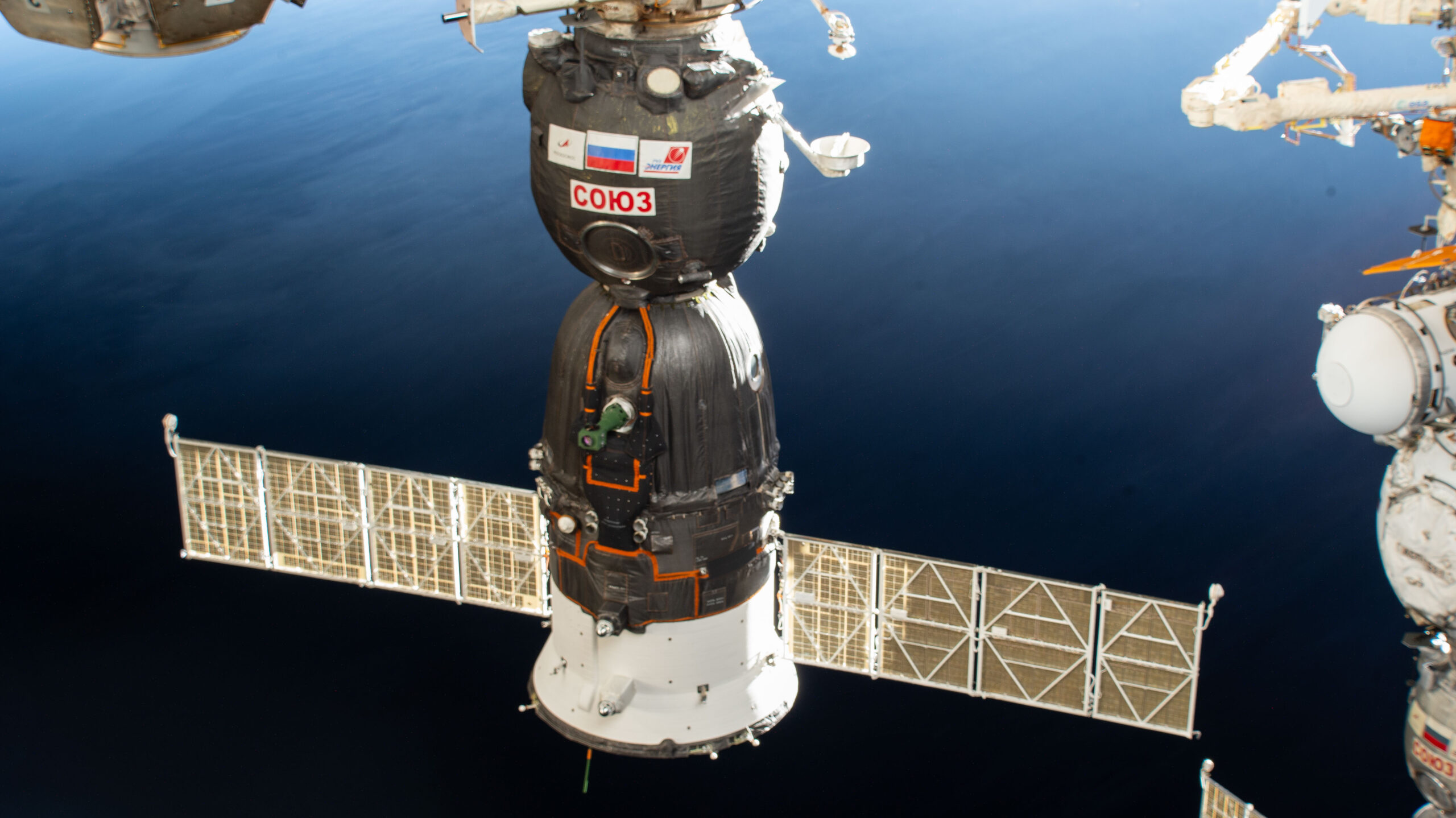
NASA astronaut Chris Williams and two Roscosmos cosmonauts are preparing to return to Earth following a 241-day mission aboard the International Space Station, with undocking scheduled aboard the Soyuz MS-28 spacecraft for Sunday, July 26, after completing thousands of orbits and millions of miles of travel.
Mission Timeline and Return Details for Soyuz MS-28
The return sequence for the Expedition 74 crew begins on Saturday, July 25, with a change-of-command ceremony at 9:40 a.m. Eastern, as NASA reported. During the ceremony, Roscosmos cosmonaut Sergey Kud-Sverchkov will hand over command of the orbital complex to NASA astronaut Jessica Meir. Official transition to Expedition 75 coincides with the physical departure of the spacecraft when Soyuz MS-28 undocks.
According to NASA, crew farewells and hatch closing coverage begins at 11:10 p.m. on Saturday, with the hatch closing officially at 11:30 p.m. The Soyuz MS-28 capsule will then undock from the station’s Rassvet module at 3:02 a.m. EDT on Sunday, July 26, following undocking coverage starting at 2:30 a.m. Following a deorbit burn at 5:32 a.m., the spacecraft will execute a parachute-assisted landing on the steppe of Kazakhstan, southeast of Dzhezkazgan, at 6:26 a.m. Eastern, which corresponds to 3:26 p.m. local time.
Crew Milestones and Final Destinations
The returning crew includes NASA astronaut Chris Williams alongside Roscosmos cosmonauts Sergey Kud-Sverchkov and Sergei Mikaev. By the time their capsule touches down, the flight will total 3,856 orbits and cover more than 102 million miles, according to agency records.
This journey marks distinct milestones for the individual crew members. The flight is the first space mission for both Williams and Mikaev, while serving as the second mission for Kud-Sverchkov.
Recovery teams positioned in Kazakhstan will transport the crew by helicopter to Karaganda immediately after landing. From there, the travelers split paths: Williams will travel to the agency’s Johnson Space Center in Houston, while Kud-Sverchkov and Mikaev are due to return to their training base in Star City, Russia.
Live Coverage Schedule and Viewing Platforms
NASA has scheduled live broadcast coverage across multiple platforms, including the NASA Live stream available at https://www.nasa.gov/live. NASA’s published schedule for live coverage, all times Eastern and subject to change based on real-time operations, details the following events:
- Saturday, July 25 at 9:40 a.m. EDT: Expedition 74/75 change-of-command ceremony
- Saturday, July 25 at 11:10 p.m. EDT: Crew farewells and hatch closing coverage (with hatch closing at 11:30 p.m.)
- Sunday, July 26 at 2:30 a.m. EDT: Undocking coverage (with undocking at 3:02 a.m.)
- Sunday, July 26 at 5:15 a.m. EDT: Deorbit and landing coverage (with the deorbit burn at 5:32 a.m. and landing at 6:26 a.m.)
Additional details regarding International Space Station research, operations, and its crews can be found by visiting www.nasa.gov/station, with inquiries handled by headquarters contacts Joshua Finch and Jimi Russell in Washington, alongside Leah Cheshier and Anna Schneider at the Johnson Space Center in Houston.
Broader Context of Continuous Orbital Operations
The International Space Station has hosted continuous human presence for more than 25 years, advancing scientific knowledge and making research breakthroughs not possible on Earth.
Agency materials note that the accumulated data and operational experience from these continuous missions help NASA understand and overcome the challenges of human spaceflight. These efforts support commercial opportunities in low Earth orbit while building on the foundation for long-duration missions to the Moon, as part of the Artemis program, and eventually to Mars.
Sources: Spaceanddefense.
Worth a look
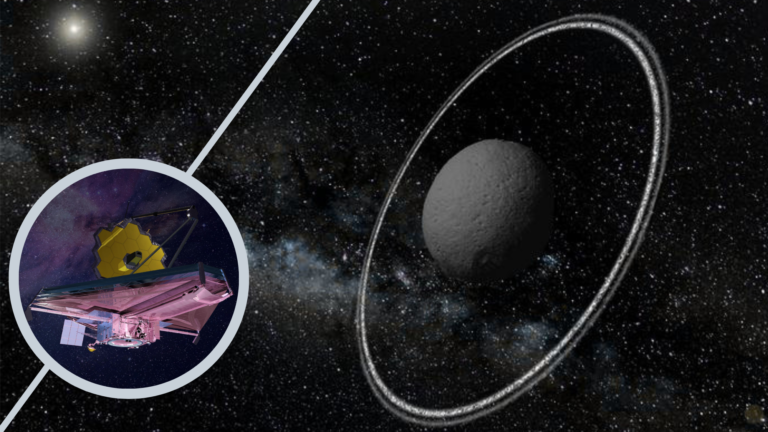
Webb Telescope Finds Chariklo’s Rings Are Changing Over Years
Astronomers using the James Webb Space Telescope (JWST) have discovered that the two narrow rings surrounding the distant...

SpaceX Launches Final Three O3b mPOWER Satellites for SES
SpaceX successfully launched the final three O3b mPOWER satellites for SES on September 13, 2026, from Cape Canaveral...
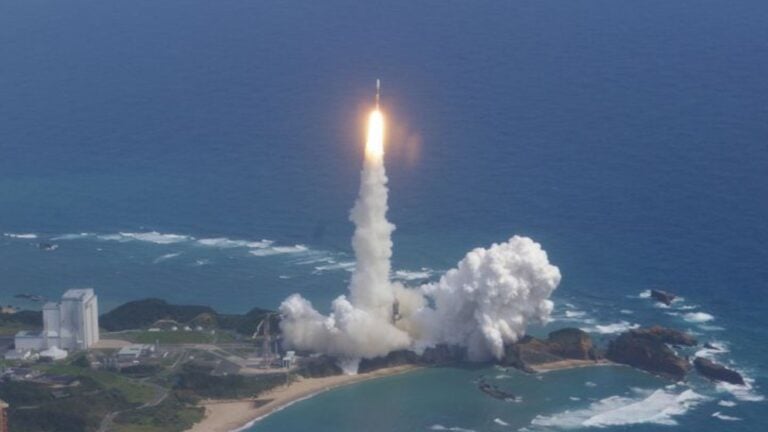
Japan Launches Kaguya Spacecraft to Map Moon in 2007
On September 13, 2007, Japan launched its advanced Kaguya spacecraft from the Tanegashima Space Centre aboard an H-IIA...

Astronomers Identify Eos, a Massive Molecular-Hydrogen Cloud Near the Sun
Astronomers have identified Eos, a massive molecular-hydrogen cloud located roughly 300 light-years away and spanning 40 full-Moon widths...