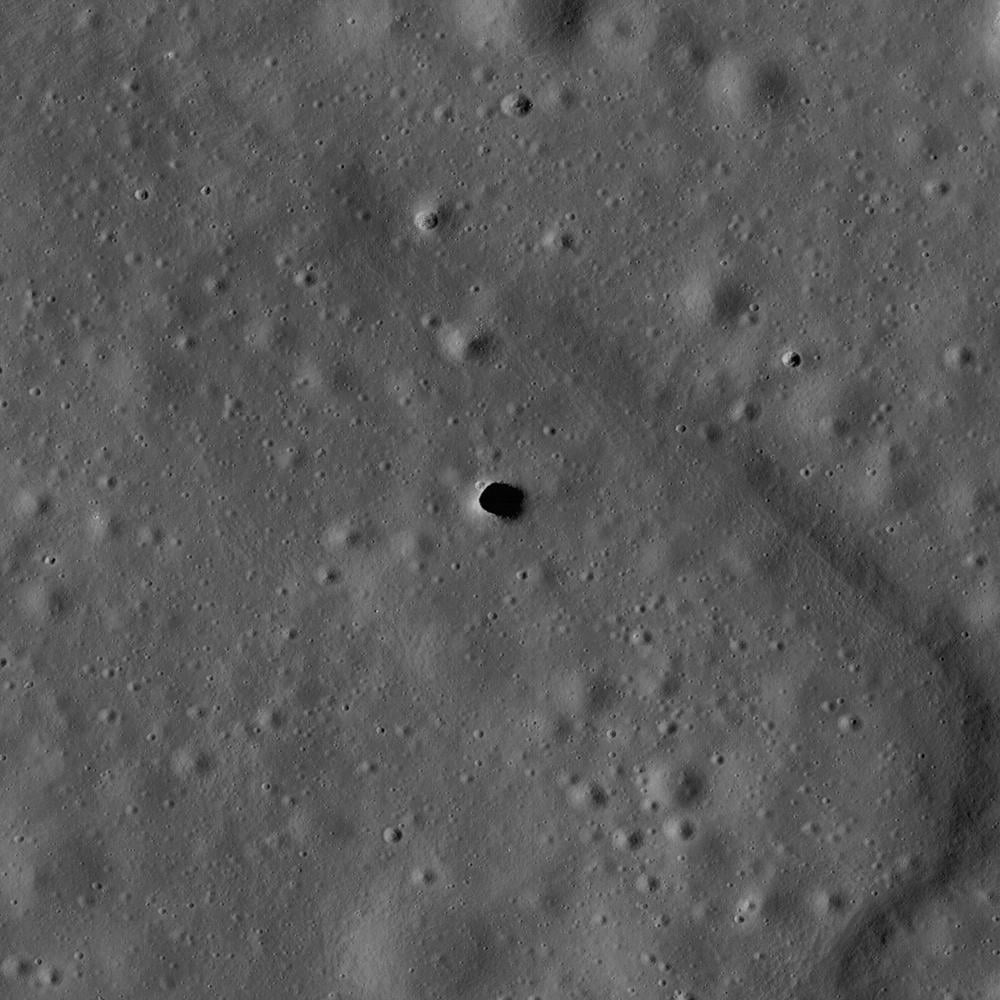
NASA has selected a Planetary Science Institute team to lead the Geophysical Instruments for Marius Lunar Pit Investigation, sending advanced radar, seismic, and gravity sensors to the lunar nearside to determine if a prominent volcanic hole connects to an underground lava tube that could shelter future human outposts.
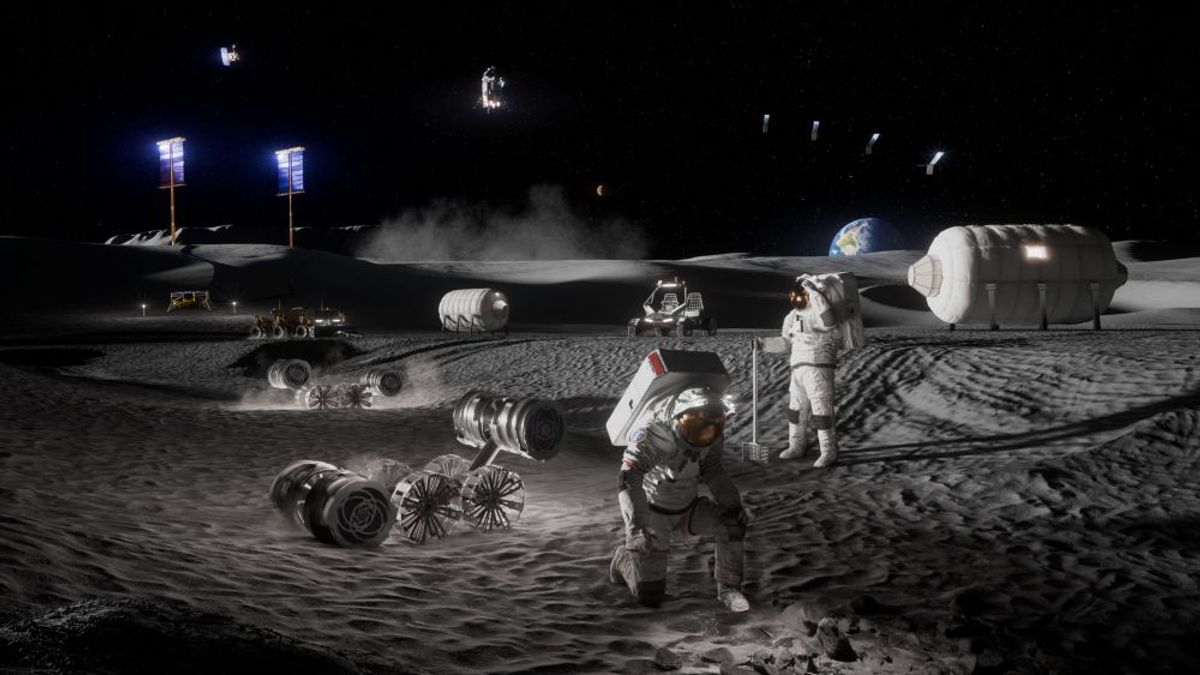
Space agencies eyeing permanent bases on the Moon face a harsh environment where surface temperatures swing from 260 degrees Fahrenheit during the day to minus 280 degrees Fahrenheit at night, alongside intense solar radiation and micrometeorite impacts. To bypass the need to engineer heavy artificial shielding for every layer of a habitat, planners are turning their attention downward. Natural subterranean spaces formed during ancient volcanic eruptions could offer stable environments, with temperatures inside protected pits remaining near a steady 63 degrees Fahrenheit.
To investigate whether those subsurface shelters actually exist, NASA has backed a project titled GIMLI (Geophysical Instruments for Marius Lunar Pit Investigation). Selected through NASA’s Payloads and Research Investigations on the Surface of the Moon program, the mission will deliver scientific instruments to the lunar surface using lander and rover hardware provided by the Commercial Lunar Payloads Services initiative.
Targeting the Marius Hills Pit on the Lunar Nearside
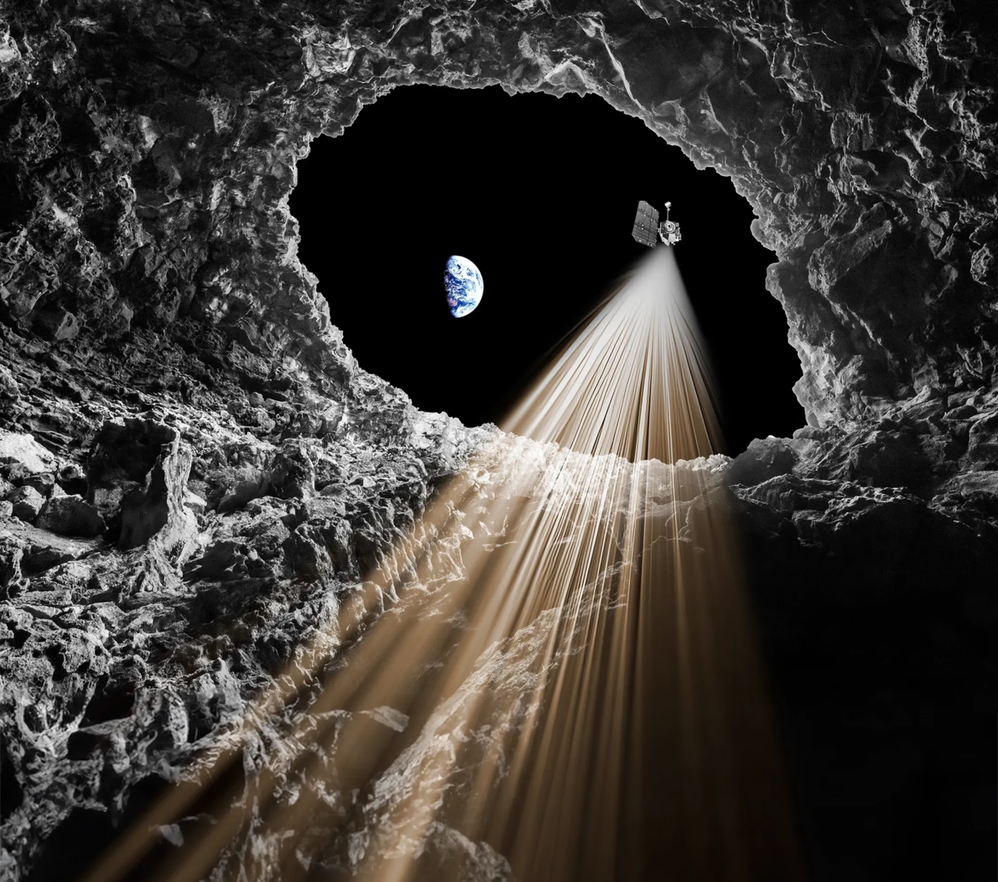
The mission focuses on the Marius Hills Pit, a prominent lunar hole situated in an ancient volcanic region on the nearside within Oceanus Procellarum. The pit measures roughly 34 meters deep and spans approximately 65 by 90 meters across. First spotted by Japan’s Kaguya spacecraft in 2009 and later examined in greater detail by NASA’s Lunar Reconnaissance Orbiter, the feature exhibits clear overhangs, suggesting to researchers that the cavity beneath the floor is significantly wider than the opening itself.
Gareth Morgan, a senior scientist at the Planetary Science Institute and deputy principal investigator on the program, noted that the pit sits inside a channel carved out by ancient lava flows known as a sinuous rille. That specific channel appears infilled in that portion, indicating an intact roof that strengthens the case for an underground cavity. Establishing the presence of a cave and its scale would also advance our understanding of how volcanism operated on the moon and the means by which lava built up the surface we see today,
Morgan said.
Observations from lunar orbit have provided compelling evidence that caves and lava tubes may exist under the lunar surface. Over 300 lunar pits have been identified on the moon, according to a 2024 study in the International Journal of Mining Science and Technology. In 2010, data from SELENE revealed two more pits in the Mare Tranquillitatis and Mare Ingenii regions.
Deploying Active-Source Seismology and Ground-Penetrating Radar
Honeybee Robotics, a Blue Origin company, will manage the project, build the active seismic instrumentation, gravimeter, and cameras, and help integrate the payload onto the lander and rover.
Than Putzig, Planetary Science Institute Associate Director and Senior Scientist
It’s long been a desire of mine to reintroduce intentional active-source seismic methods to planetary science, as it has essentially not been done since the Apollo astronauts conducted the first seismic surveys on the Moon,shared Putzig.
That seismic method will be paired with ground-penetrating radar and a gravimeter to probe subsurface properties directly from the surface. Cameras will simultaneously image the surface terrain and the exposed rock layers of the pit walls, revealing regolith and ancient lava strata that remain hidden elsewhere on the Moon.
Unlocking Volcanic History Regardless of What Lies Beneath
Even if the instruments detect no subterranean cave system, the gathered data will clarify how the pit itself formed and measure the surrounding geology.
Amanda Hendrix, PSI Director and CEO
GIMLI represents the type of ambitious planetary science that PSI was built to pursue,said PSI Director and CEO Amanda Hendrix.
As mission leaders prepare their instruments for flight, the ultimate scope and geometry of whatever lies beneath the Marius Hills floor remain unproven by direct surface measurement, leaving the upcoming payload to test whether these geological skylights can indeed serve as humanity’s first natural shelters away from Earth.
First Nuclear Clocks Developed by Teams in Vienna and Beijing
Operating independently in Beijing and Vienna, research groups have built the globe's first pair of functional nuclear clocks,...

Moon Passes in Front of Jupiter During Rare Occultation
Observers across North America watched the Moon conceal Jupiter on Tuesday morning in a rare planetary occultation that...
Researchers Suggest Animals May Have Evolved 200 Million Years Earlier
Using scanning electron microscopy on more than 140 samples, researchers analyzed the Kheseen Biota in Mongolia to test...
University of Copenhagen Researchers Reveal Earth and Mars Formed Differently
Earth and Mars formed side by side from the same cosmic cloud roughly 4.5 billion years ago, yet...