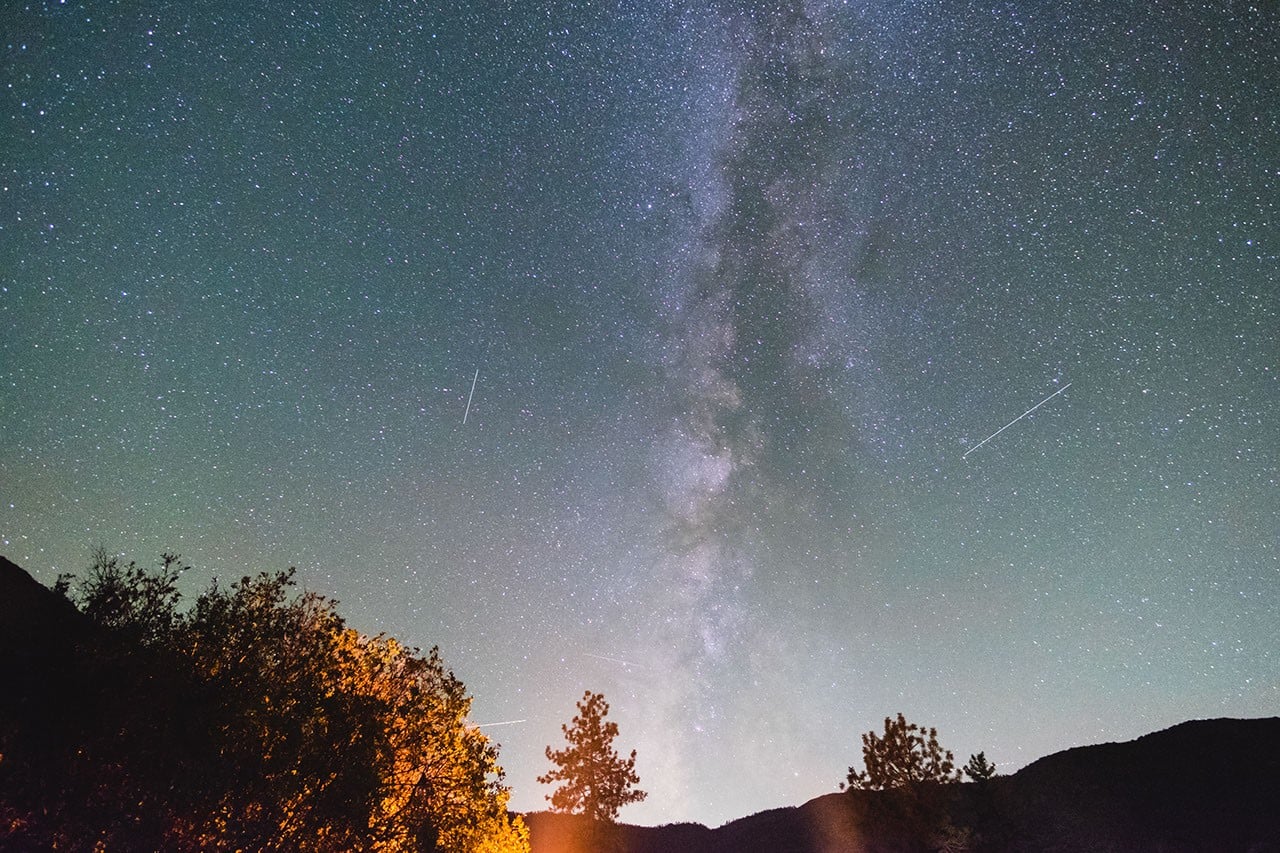
October 2026 brings North American stargazers an unusually favorable combination of clear skies, comfortable autumn temperatures, and a packed celestial calendar featuring Saturn at its brightest, two meteor showers, and a close pairing between the Moon and the Pleiades star cluster.
Saturn Reaches Opposition and Peaks in Brightness
The month’s astronomical highlights kick off on October 4, when Saturn reaches opposition, placing Earth directly between the ringed planet and the sun. This alignment gives skywatchers one of the best viewing opportunities of the year as Saturn rises around sunset and remains visible for much of the night.
At opposition, the planet sits roughly 1.26 billion kilometers away, meaning light takes about 70 minutes to travel from Saturn to observers on Earth. While the planet is a steady yellowish point to the unaided eye, steady binoculars at roughly 10x show it as an oval shape. A small telescope capable of about 25x magnification brings the iconic rings into view, a sight that observers note frequently draws a quick response.
“a breathtaking sight that almost always guarantees a “WOW” response.”
Adrian Wakeham, Stratford Astronomical Society member via Stratford Herald
Stargazers viewing the planet this year will notice that the rings appear unusually narrow. The ring plane passed straight through our line of sight on March 23, 2025, causing the rings to all but disappear in telescopes. At this year’s opposition, they are tilted at roughly 7.5 degrees—about a quarter of their maximum—and will not fully open again until approximately 2031. Beyond the rings, NASA notes that observations using the Hubble Space Telescope recently revealed a ten-sided atmospheric wave encircling Saturn’s south pole, adding an active weather pattern for researchers to watch alongside the traditional northern hexagon jet stream. Additional features include Titan, Saturn’s largest moon, which grows larger than the planet Mercury and appears as a tiny, faint star sitting just beside the ringed planet, while Neptune is also nearby for those using magnification.
Halley's Comet Debris Fuels Orionid Meteor Shower
Later in the month, debris left behind by Halley’s Comet fuels the Orionid meteor shower, which reaches its peak from the night of October 21 into the morning of October 22.
Observers under dark skies can generally expect between 10 and 20 meteors per hour. Because these space rocks travel at high speeds of 41 miles per second, they can leave behind persistent trains lasting anywhere from a few seconds to several minutes. A bright waxing gibbous Moon will wash out fainter streaks earlier in the evening, making the hours just before dawn after the Moon sets the optimal time to look up. Alongside the Orionids, the month also features the Draconid meteor shower reaching its peak on October 9 with a waning crescent moon.
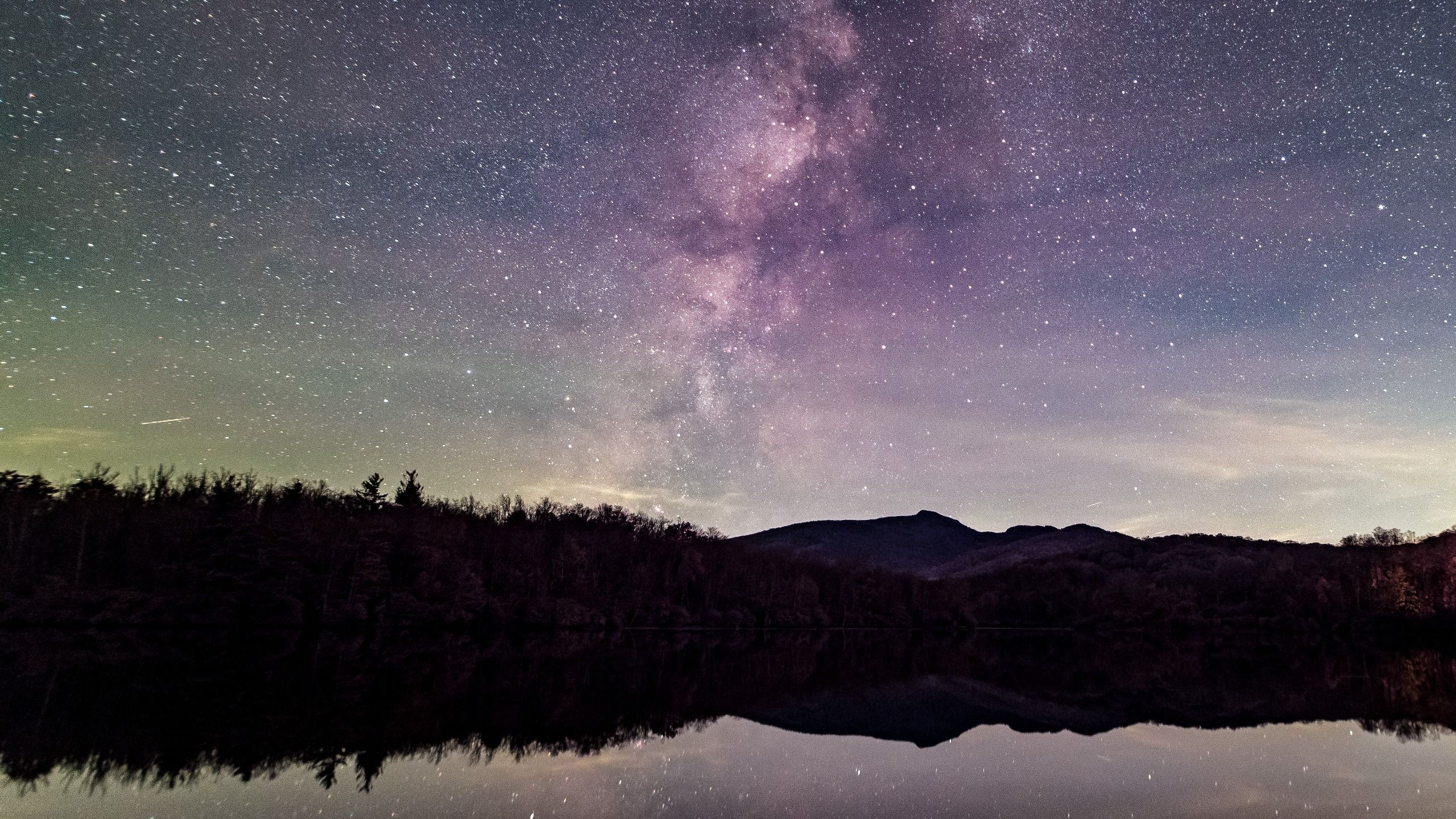
Clear Skies and Favorable Climatology Across North America
October stands out as a favored month for stargazing largely due to an unusual combination of comfortable autumn temperatures and favorable atmospheric transparency before cloudier November weather arrives across much of the continent. According to maps issued by the National Climatic Center in Asheville, North Carolina, October is statistically the clearest month of the year for many locations across the eastern and central United States.
The climatological record shows that observing conditions deteriorate rapidly as autumn gives way to winter. Joe Rao, an instructor and guest lecturer at New York’s Hayden Planetarium who writes about astronomy for Natural History magazine, Sky and Telescope, and The Old Farmer’s Almanac, notes that a weather pattern sixty-one years ago similarly obscured predawn views of Comet Ikeya-Seki for observers east of the Mississippi. Data from NOAA’s Local Climatological Data indicates that 98 percent of weather stations sampled experience their cloudiest month between November and May. From November through April, roughly 25 to 35 percent of the United States endures greater than 70 percent cloud coverage during various months, making October an ideal bridge between summer stars and winter constellations.
The Moon Visits the Seven Sisters and Lights Up the Month
The month’s calendar rounds out with close encounters between the Moon and deep-sky landmarks. On the night of October 27 into October 28, the Moon passes close to the Pleiades star cluster, also known as the Seven Sisters. Visible to the unaided eye as a fuzzy grouping of six to seven stars, the cluster can be examined in detail with binoculars or a small telescope.
Earlier in the cycle, the full Hunter’s Moon reaches peak illumination at 12:12 a.m. ET on October 26, traditionally following the Harvest Moon and providing several nights of bright illumination before the month closes out. The month also features a thin crescent Moon appearing close to bright Jupiter before sunrise on October 6.
Related reading

Researchers Use Reef Soundscapes to Boost Coral Larvae Settlement
Marine researchers are deploying underwater speakers to play recordings of healthy reefs to coral larvae across the Caribbean...
Vitamin D2 Supplements Lower Natural Vitamin D3 Levels, Study Finds
While both supplement forms increase overall vitamin D status, researchers caution that D3 is more effective at raising...
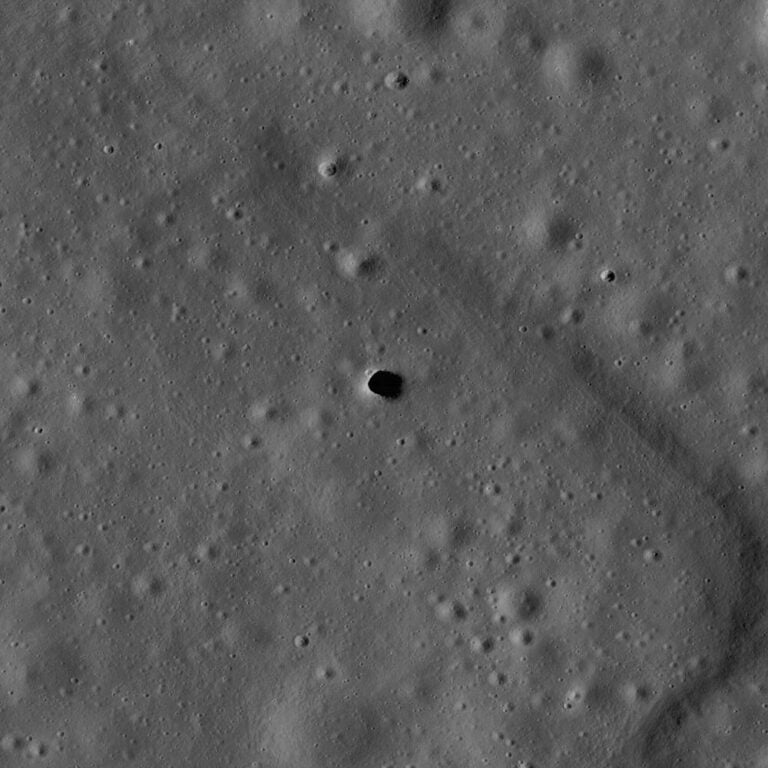
NASA Selects GIMLI Project to Search Marius Lunar Pit for Potential Base Sites
NASA has selected a Planetary Science Institute team to lead the Geophysical Instruments for Marius Lunar Pit Investigation,...

First Nuclear Clocks Developed by Teams in Vienna and Beijing
Operating independently in Beijing and Vienna, research groups have built the globe's first pair of functional nuclear clocks,...