
Scientists using the NSF Daniel K. Inouye Solar Telescope in Maui have discovered Kelvin-Helmholtz instability whirlpools on the Sun’s photosphere. Announced on August 5, 2026, the breakthrough combines high-resolution imaging with computer simulations to explain how magnetic energy builds up to drive solar flares and space weather.
Researchers operating the world’s most powerful solar facility high above the summit of Maui’s Haleakalā have captured the first experimental confirmation of a long-predicted fluid dynamic process across the Sun’s surface. The finding merges ultra-sharp observations from the U.S. National Science Foundation Daniel K. Inouye Solar Telescope with advanced computer models, revealing chaotic, whirlpool-like disruptions fringing the boundaries of magnetic active regions.
The discovery exposes microscopic activity at a scale of tens of kilometers, offering a fresh lens on how plasma and shifting magnetic fields interact on our nearest star.
Spotting the Kelvin-Helmholtz Instability in the Solar Photosphere
Kelvin-Helmholtz instability occurs when two adjacent fluid layers slide past one another at varying velocities, creating a shear interface that grows into striking, wave-like or spiraling vortices resembling breaking ocean waves.
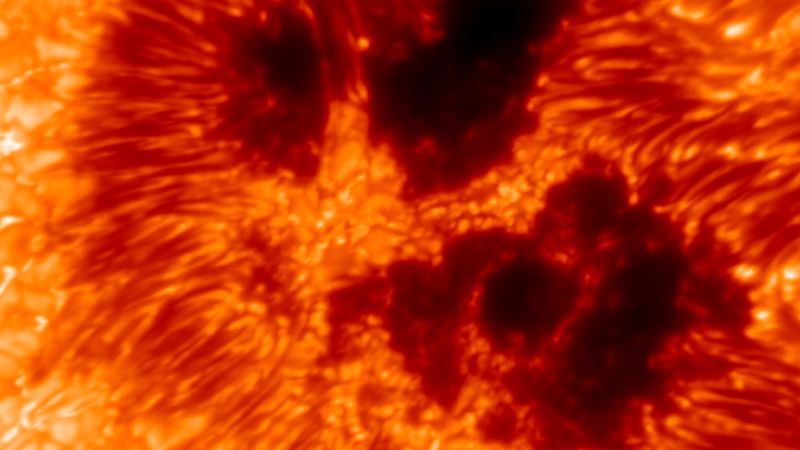
Until now, observing the same mechanism on the Sun remained out of reach. An international research team drawn from the National Solar Observatory, the NSF NCAR High Altitude Observatory, and the Max Planck Institute for Solar System Research identified the telltale stripes and deformed magnetic boundaries in data published in the journal Nature, as detailed by the NSF National Solar Observatory.
“We believe that the discovery of Kelvin-Helmholtz instability in the solar photosphere, backed up by analysis of numerical simulations, is a major step forward in our understanding of the dynamics and evolution of solar and stellar plasma, and will serve as a basis for future discoveries.”
Dr. David Boboltz, Deputy Director at the National Solar Observatory
Engineering and the Visible Tunable Filter Milestone
The breakthrough relies on the telescope’s escalating instrumentation suite, specifically its newly commissioned Visible Tunable Filter spectro-polarimeter. Developed over roughly 15 years primarily at Germany’s Institute for Solar Physics in Freiburg, the 5.6-ton device occupies two floors inside the observatory’s Coudé Lab.
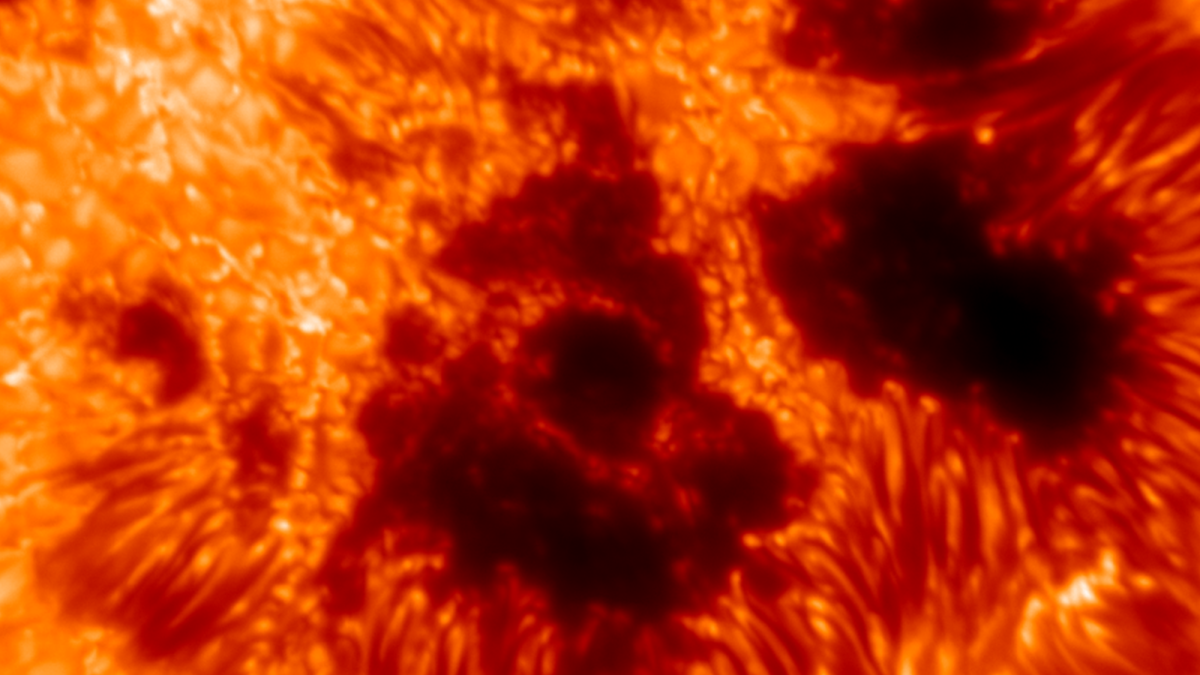
Following an installation process that began at the start of 2024, the instrument recently achieved its technical first light milestone.
“The instrument is, so to speak, the heart of the solar telescope, which is now finally beating at its final destination.”
Matthias Schubert, VTF project scientist
Operating at a resolution where each pixel corresponds to 10 kilometers or 6.2 miles on the Sun, the VTF successfully targeted a gigantic sunspot using a 588.9-nanometer sodium wavelength during its early technical tests, according to the Max Planck Institute for Solar System Research.
Consequences for Space Weather and Earth Infrastructure
Understanding these small-scale plasma dynamics is more than an academic exercise. Solar flares and coronal mass ejections hurl high-energy particles and magnetic fields across the solar system, occasionally threatening human infrastructure.
As the Sun moves through its current 11-year activity cycle, having recently reached the solar maximum peak monitored by NOAA, NASA, and the Solar Cycle Prediction Panel, the timing aligns with an active phase of solar outbursts.
Worth a look

Super El Niño Projected to Cause Over 450,000 Heat Deaths Worldwide
Concurrently, California officials have declared a state of emergency, mobilizing emergency supplies, flood-fighting equipment, and National Guard logistics...
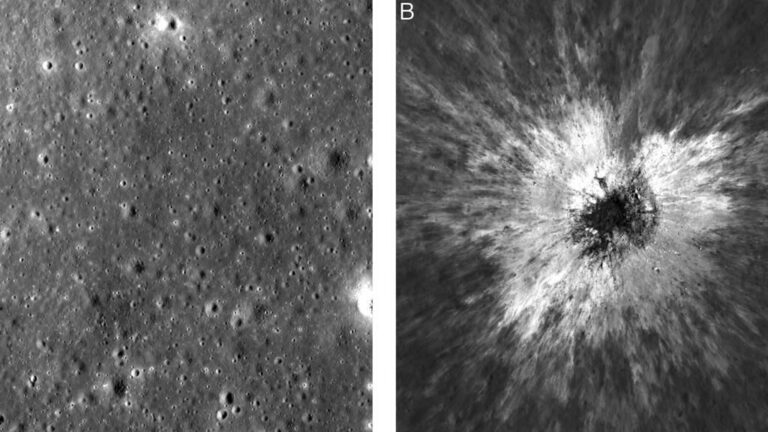
NASA Discovers Rare Massive Lunar Crater Created by 2024 Impact
NASA has discovered a massive, 730-foot-wide lunar crater created by an asteroid or comet impact in spring 2024.
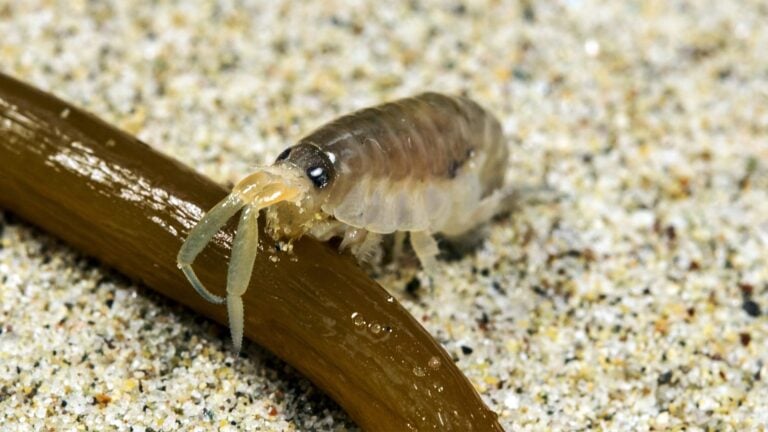
Sand Hoppers Move Hundreds of Tons of Sand on California Beaches
Inch-long beach crustaceans known as sand hoppers dig fresh burrows nightly along Southern California shores, moving an estimated...

Scientists Discover 13 Fatty Acids in Cat Urine That Form Unique Scents
Researchers in Japan, Germany, and Spain have discovered 13 unusual branched-chain fatty acids in domestic cat urine that...