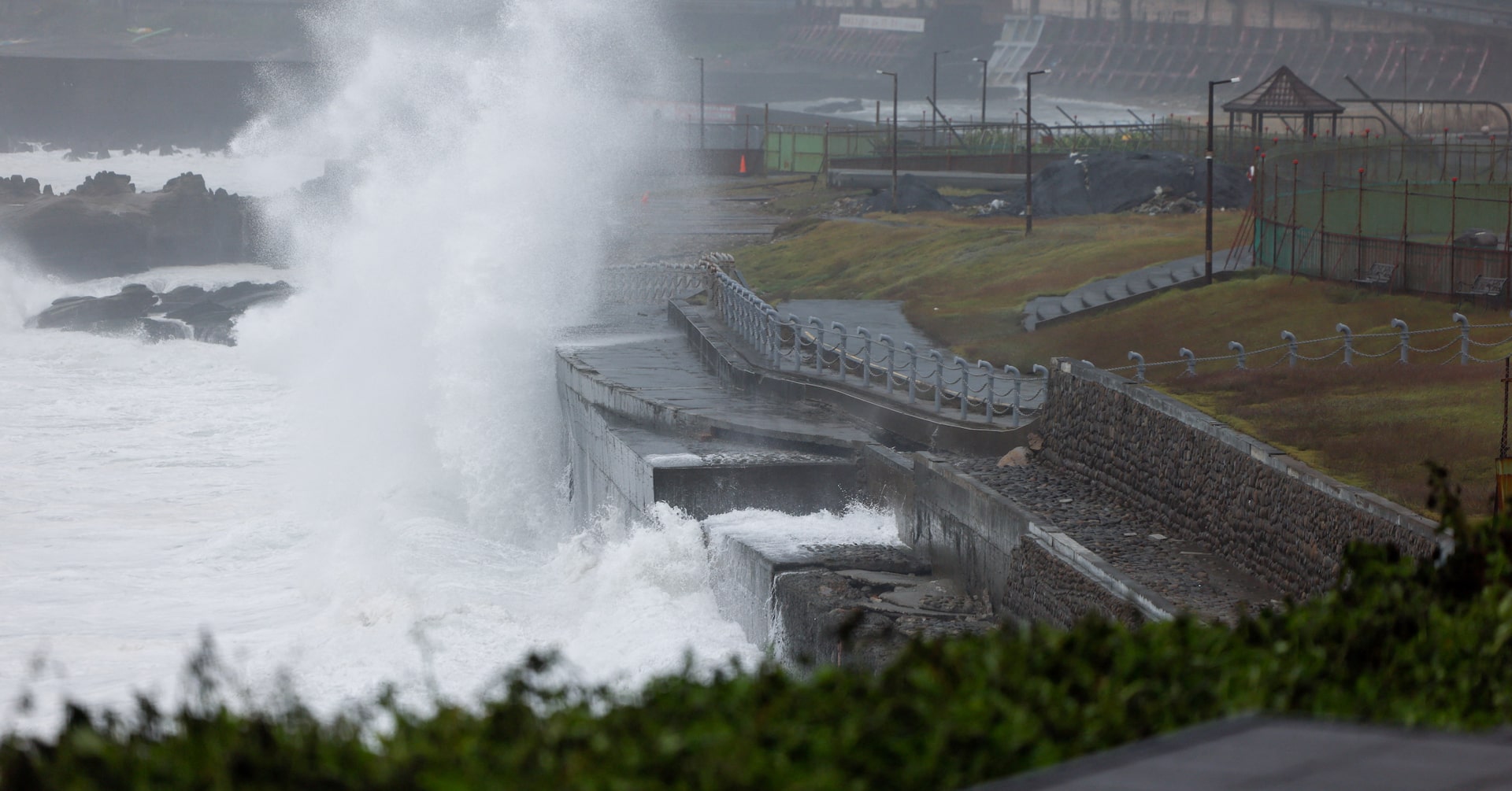
Typhoon Champi swept near northeastern Taiwan on October 23, 2026, prompting widespread shutdowns across the island. The storm grounded nearly 1,000 flights, closed financial markets, and left one person dead and over 170 injured after reaching Category 5 strength earlier in the week.
Nearly all of Taiwan came to a halt on Friday as Typhoon Champi brushed past the island’s northeastern coast. Although the system weakened significantly from its earlier peak as a Category 5 storm, its immense reach brought gale-force winds and torrential downpours that disrupted transport networks, closed schools, and forced thousands from their homes. As of Wednesday morning EST, Super Typhoon Champi had achieved winds of 175 miles per hour, according to the National Oceanic and Atmospheric Administration.
Flight Grounds, Market Closures, and Public Transport Disruptions in Taiwan
The transport ministry reported that all 262 domestic flights were cancelled alongside hundreds of international connections. Major carriers implemented waiver policies for affected passengers, while the Civil Aeronautics Administration logged 977 total cancellations by Friday morning, including 669 international flights recorded by the transport ministry. Airlines such as Singapore Airlines cancelled scheduled Singapore to Taipei services on October 23, providing passengers with options to rebook or claim a full refund for the unused portion of their tickets through the carrier’s Assistance Request Form. Meanwhile, China Airlines and Peach offered to waive change and refund fees for passengers affected by the typhoon disruptions.
Financial markets suspended trading for the day, and schools and offices closed across almost every administrative district. The sole exception was the Taiwan-controlled Kinmen archipelago near the Chinese coast, which maintained normal operations. In Taipei, the capital experienced squally showers and gusty winds, though the metro system continued running on a reduced schedule.
Casualties, Evacuations, and Warnings Issued by the Central Weather Administration
The fire department confirmed one person died on Thursday after being swept away by high waves off Liuqiu, a small island situated south of the main island. Emergency services recorded 171 injuries, while local governments evacuated more than 2,600 residents from vulnerable mountainous districts, with Focus Taiwan reporting that close to 1,300 individuals were moved from mountainous areas.
President Lai Ching-te inspected the Central Emergency Operation Center in New Taipei City as the storm’s massive wind radius—estimated at roughly 320 kilometers—engulfed most of the island. Meteorologists warned that the system’s slow forward speed meant severe weather would persist.
Typhoon Champi is forecast to begin turning northward Thursday, moving away from Taiwan, but its impact on the island is expected to be most pronounced Friday and Saturday, according to the Central Weather Administration.https://t.co/5FZdP5D8b3
If the storm slows down, the strong winds will affect Taiwan for longer.
Liu Pei-teng, forecaster at Taiwan’s Central Weather Administration, via Reuters
Record-Breaking Intensity and Track Across the Western Pacific
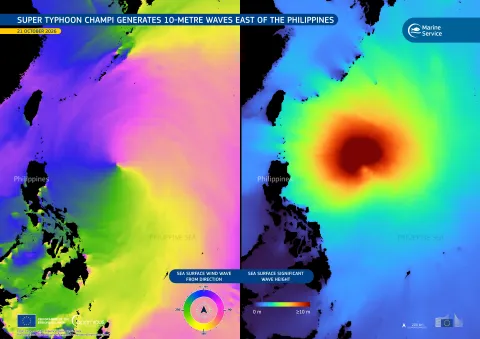
Before threatening East Asia, Champi established itself as the strongest tropical cyclone worldwide in 2026. On October 21, data from the Copernicus Marine Service and the US National Weather Service recorded maximum sustained winds reaching approximately 298 kilometers per hour, placing the storm at the top tier of the Saffir-Simpson scale.
The typhoon previously impacted the US territory of Guam, leaving half the island without power after its eye passed within 16 kilometers. In the Philippines, where the storm was designated Super Typhoon Rosal, the coast guard barred maritime traffic across northern provinces, and Batanes officials boarded up airport windows as wave heights reached up to 12 meters along coastal areas. Forecasters at AccuWeather warned that heavy rain and strong winds would continue impacting parts of Taiwan and eastern China through the weekend.
Regional Impact on Maritime Logistics and Chinese Coastal Preparations
Supply chain analysts noted that Champi threatened to disrupt maritime recovery efforts across East Asian ports following earlier storm activity. Maritime services provider Mas Oceans warned that fresh adverse weather could create further operational challenges, noting reports that pilotage at the Changjiang Estuary had been suspended. In eastern China, authorities in Zhejiang and Fujian provinces ordered fishing vessels back to port, suspended dozens of passenger ferry routes, and halted scores of marine construction projects.
Forecasters tracked the system turning north-northeast toward the Chinese coast and Japan’s southwestern islands, with weather agencies anticipating heavy rainfall and structural damage risks to extend through the weekend.
#IGR: Hundreds of flights have been cancelled across East Asia as Typhoon Champi approaches Taiwan, disrupting air travel across the region.Authorities are monitoring the storm as it brings strong winds and heavy rainfall, with further disruptions expected as the typhoon moves… pic.twitter.com/Tvm1iutfLB
=== END ARTICLE >
More on Super Typhoon Champi
Taiwan has suspended work and classes as Typhoon Champi, the strongest Pacific storm of the year, approaches. More than 1,000 people have been evacuated, hundreds of flights cancelled and forecasters warn that some mountainous areas near Taipei could receive up to one meter of… pic.twitter.com/3tcWyeJVtD
Keep reading

Christa Pike Survives Botched Tennessee Execution Attempt
Death row inmate Christa Pike survived a botched execution attempt in Tennessee after staff struggled with intravenous lines,...

Wicknell Chivayo Gave Sugar Sugar Unregistered Toyota Fortuner
Zimbabwean businessman Wicknell Chivayo’s death has left a tangled web of unpaid car dealer debts and unresolved gifts,...

Haines hit in critical condition
Independent Australian MP Helen Haines remains in critical condition following a deliberate car attack outside her Wangaratta office...

UAE’s Nusseibeh Joins Race for UN Chief
Senior United Arab Emirates diplomat Lana Nusseibeh entered the contest for United Nations secretary-general on October 21, 2026,...